Magadan Snow Crab Is a Fishing Ground, Not a Breed
Snow crab from the Magadan waters of Russia goes by that name. Grown slowly in cold water, it tends to have a hardened shell and densely grained meat. Stil
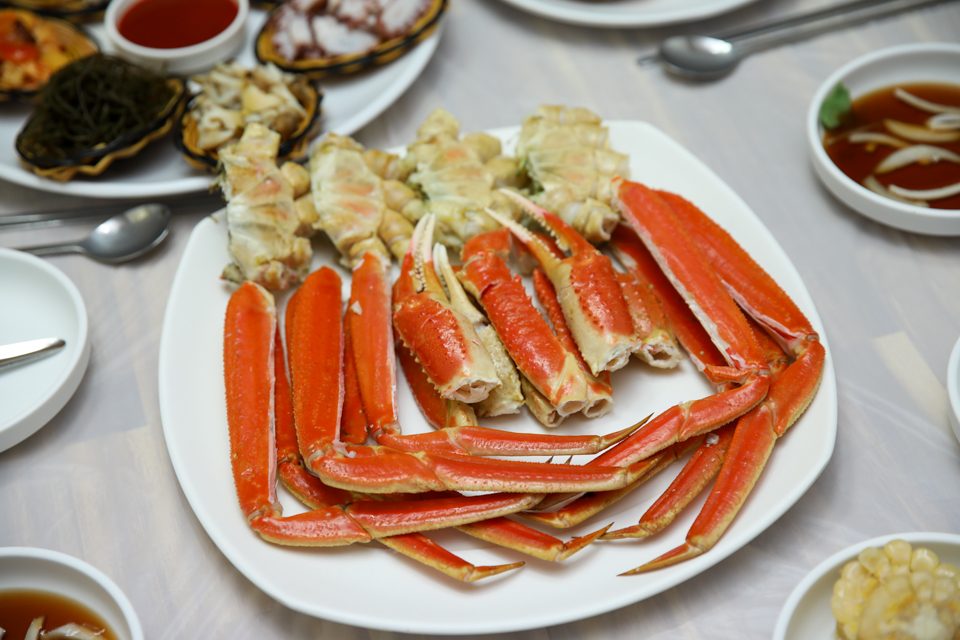
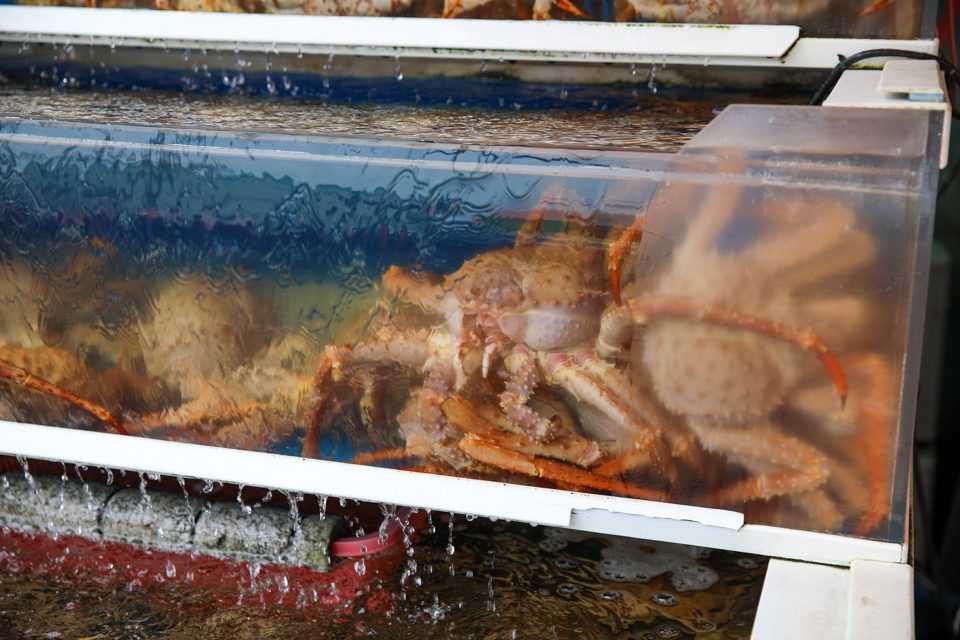
Magadan snow crab means snow crab caught in the Magadan waters of Russia. It is not a separate breed or variety, it is the name of the place the crab comes from. Because these crabs grow up in very cold water, the shell tends to be hard and the meat tends to be packed in tight, and they also hold up well in a live tank.
Standing in front of the tank, customers ask me this question all the time. “Is this one Magadan?” The people who ask are usually checking on a name they have heard somewhere before. But the follow-up question rarely comes. Most people do not actually know what Magadan is, or why that name gets attached to a crab in the first place.
In twenty-five years of doing this work I have given that explanation thousands of times. Every time, I have a few minutes in front of the tank to compress it, and every time I run out of time before I finish. So I am going to write it down properly here, once and for all.
Let me give you the conclusion up front. Magadan is not a breed, it is a place name. And there is a reason that place name gets used. I will go all the way through to how that reason shows up on the plate in front of you.
Contents
- Where Magadan actually is
- Why we name the fishing grounds at all
- The difference cold water makes
- How to check for yourself at the tank
- Character of crab by fishing ground
- What changes with the season
- The order to eat things in once it arrives
- Staying power in the tank
- What the cleaning work reveals
- A few words from the man selling it
- Frequently asked questions
Where Magadan actually is
Magadan is a region in the far northeast of Russia. It faces the Sea of Okhotsk, at a latitude far higher than the waters off our own coast. To put it plainly, it is a very cold sea.
Snow crab caught in those waters is what gets called Magadan snow crab. The snow crab as a species lives across the cold waters of the North Pacific in general. It comes out of our own East Sea, it comes out of several Russian fishing grounds, and it comes out of the Alaskan side as well. Since the species is the same, you can barely tell them apart by looks alone.
But even within the same species, where the crab grew up changes its body. The water temperature is different and the food is different. That is why the people who sell crab attach the name of the fishing ground to it. The name Magadan gets attached exactly that way.
So to sum it up: Magadan snow crab is not a separate variety, it is snow crab that came from the Magadan fishing grounds. You need to have that straight first, or nothing else in this story will make sense.
Why we name the fishing grounds at all
The way you look at grades when you buy beef, you look at the fishing ground when you buy crab. There is no formal grading system for crab, so the name of the waters stands in for one.
Two crabs of the same weight and the same size can be completely different inside depending on where they came from. Since nobody can crack open and check every single crab one by one, the names of waters that have proven good over the years became a kind of signal. Magadan is one of the names that earned its place that way.
But there is a trap here, and I want you to see it. A fishing ground name only tells you the average. Not everything that comes from Magadan is good. Even within one load off the same boat, there are good crabs and disappointing crabs mixed together.
That is why I treat the fishing ground as reference material only. The final call I make myself, by picking each crab up in my own hands before it goes into the tank. If you buy on the name alone, the day will come when you get burned. It always does.
The difference cold water makes
Why is a crab raised in cold seas different? The reason is simple.
When the water temperature is low, the crab grows slowly. A body that grew slowly has dense, tightly packed tissue. Compared with a fast-grown crab, the meat is firmer and the grain of the flesh stays alive when you chew it. If you think of it like wood, it is the same as a tree with tight, closely spaced growth rings.
The shell also gets thicker. That is a small drawback at the table, since it takes a little more work to eat, but the advantage is far bigger: the legs take less damage in transport. A crab with a weak shell loses legs on the way, and once a leg breaks off, water gets in through the wound and the meat there turns mushy.
And these crabs have staying power. A crab used to cold water stays alive in the tank for a long time. Staying alive longer means there is room to hold its condition all the way until it reaches the customer’s table.
One misunderstanding I have to head off, though. Coming from a cold sea does not automatically mean the crab is full of meat. How full a crab is depends on its molting cycle, and that depends on when it was caught. The fishing ground and the timing are two separate stories.
How to check for yourself at the tank
The surest way to confirm where a crab came from is to ask. The seller knows. There is no shop selling crab that does not know where its stock came from.
But do not stop at confirming the origin. What comes next matters more. There are just three more things to check.
First, the weight when you pick it up. Among crabs of the same size, there will be one that feels noticeably heavy in the hand. That is the one that is full inside. If it feels light, the meat has not filled out relative to the shell.
Second, press lightly on the base of a leg. If it resists firmly, good. If it gives way soft under your finger, there is a fair chance the crab molted not long ago.
Third, the color of the belly. A crab with a slightly yellowish cast to the underside has lived longer than one with a clean white belly. A crab that has lived longer has a hardened shell and a fuller inside.
Once you have checked these three things, the fishing ground name becomes secondary information. In the end, the individual crab in front of you is the answer.
Character of crab by fishing ground
I have put together the fishing grounds customers most often mix up. This is not a ranking of which is better, it is a difference in character.
| Fishing ground | Shell | Meat texture | Notable trait |
|---|---|---|---|
| Magadan waters | Thick and hard | Dense, with the grain of the flesh intact | Holds up well in the live tank |
| Other Russian waters | Generally hard | Varies from lot to lot | High volume, easy to source |
| East Sea coastal waters | On the thin side | Soft, with sweetness up front | Heavily affected by the closed fishing season |
As you can see from the table, this is a matter of taste, not of rank. If you like a chewy grain to your crab meat, the cold-water side suits you. If you like a soft, sweet-forward bite, the coastal side is your match.
What changes with the season
You cannot talk about fishing grounds without talking about the season. Even the same Magadan stock changes depending on the time of year.
The best window is the stretch where winter turns into spring. Crabs in this period have had plenty of time since their last molt, so the shell has hardened and the inside has filled out. Pick one up and the heft in your hand is unmistakably different.
The opposite is a crab caught right after molting: thin shell, meat not yet filled in. This is what people commonly call a soft crab, a water crab. Buy the same weight and you take home far less to actually eat, so it is a losing deal.
In summer, the closed fishing season applies to snow crab from our own coastal waters. The mix of stock moving through the market changes during that period, so at that time of year the fastest route is simply to ask the seller what is worth choosing that day.
The order to eat things in once it arrives
When the crab reaches your table, there is an order to things. Follow it and the same crab eats better.
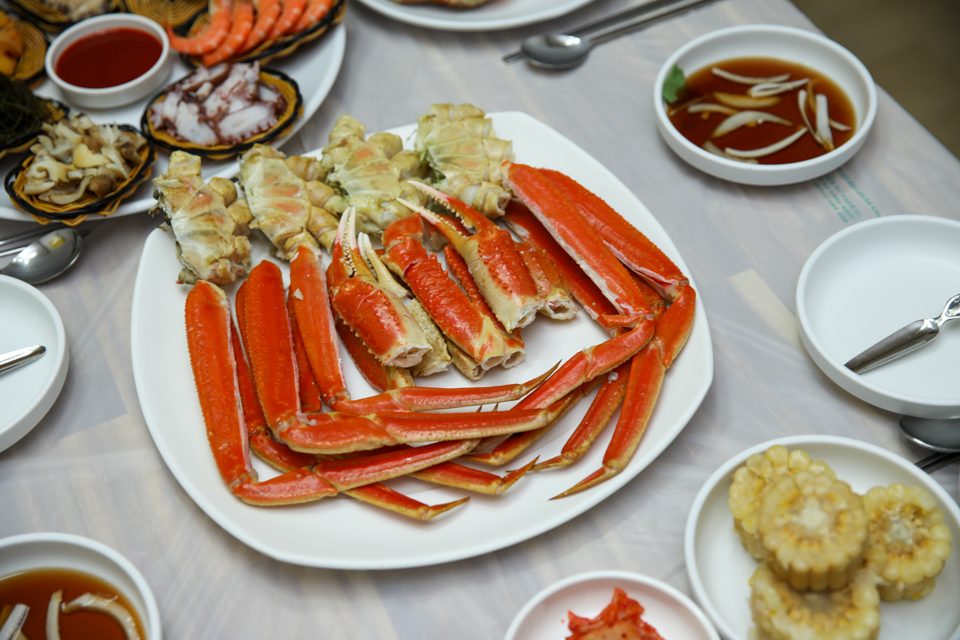
Start with the legs. Leg meat stiffens in the grain as it cools. It has to be eaten hot for the fibers to come apart soft and easy.
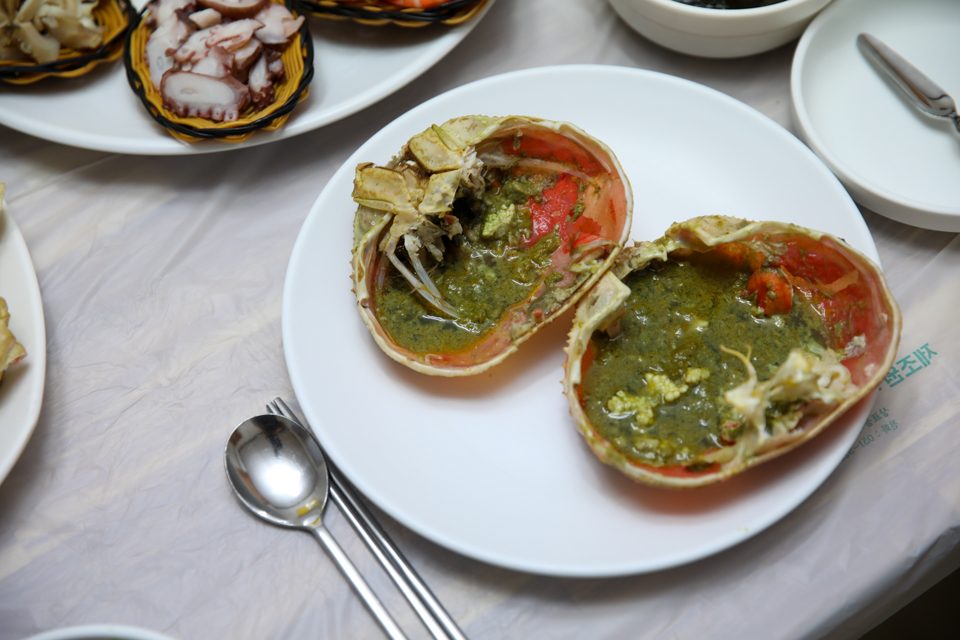
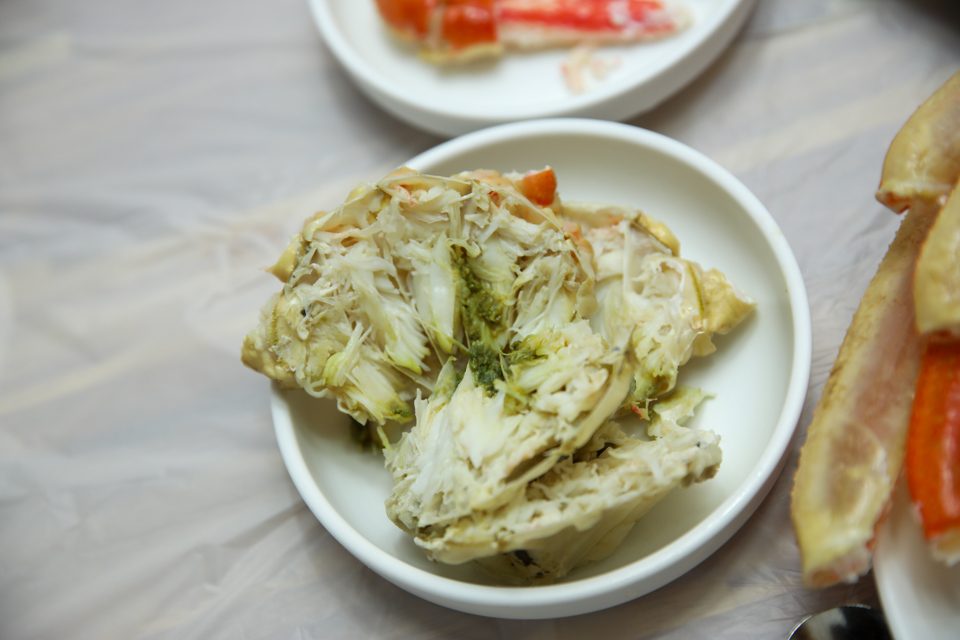
The body comes next. Body meat cools more slowly than the legs, so it is fine to get to it a little later. We split the body open for you, so all you have to do is scrape the meat out with a spoon.
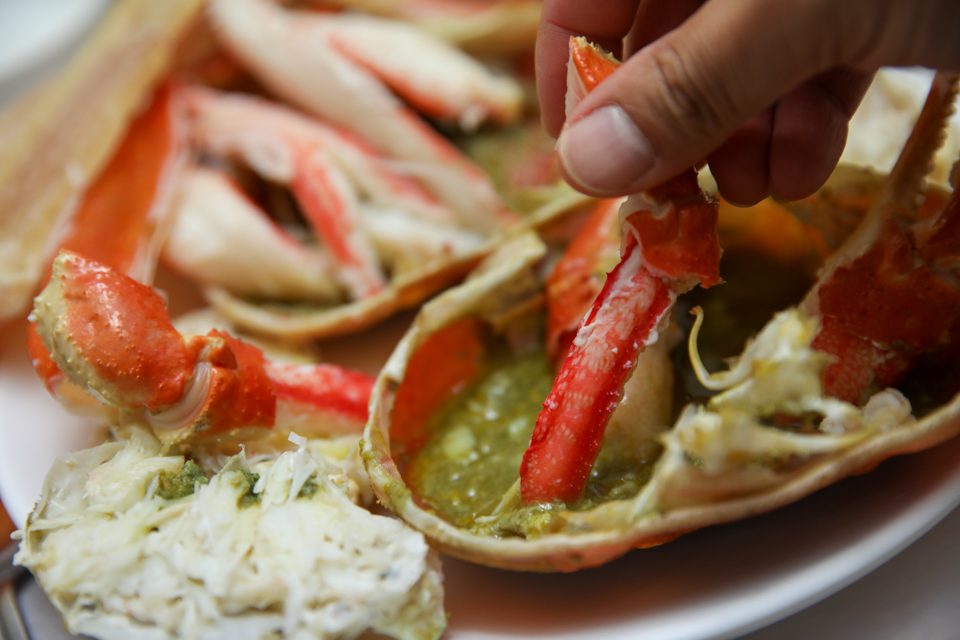
The top shell comes last. Mix rice into the innards pooled in there and the meal comes to its close. A little crumbled dried seaweed and a touch of sesame oil at this point does it good.
If you want broth along the way, have ramyeon or a stew alongside. The broth that comes out of crab shells goes very well with rice.
A few words from the man selling it
Having written this far, I figure there is one thing I had better make plain.
A fishing ground name is a handy word for marketing. So there are cases where it gets used with more air in it than the facts allow. When a customer asks me about origin, I tell them exactly where that day’s stock came from. If it is not Magadan, I say it is not Magadan.
And even when the origin is good, if the condition that day is disappointing, I say so. Some days I steer people to something else entirely, because that day it is simply better. A customer is not someone I sell to once and never see again.
This is why I go out at dawn every day and choose the stock myself. If I take what someone else picked for me, I do not know what was good that morning and what was not. And if I do not know, I cannot explain it to my customers.

Making use of what is left
When you have finished eating, the shells remain. There is still broth to be had from them.
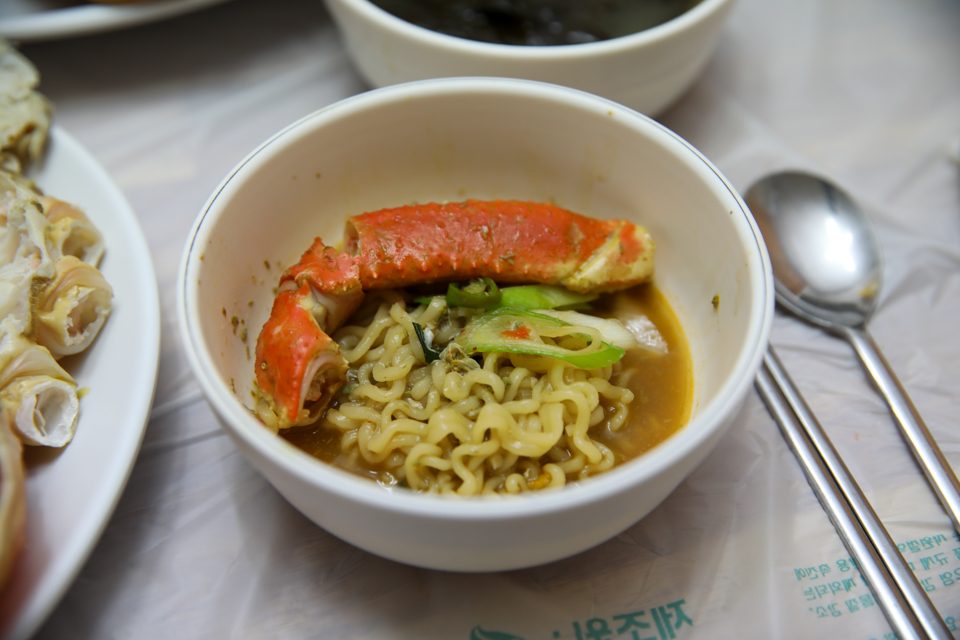
We take the leftover shells and cook ramyeon in them for you. Broth drawn from crab shells is a different thing from kelp broth or anchovy broth. Sweetness comes before salt, and the finish is clean.
The same goes for doenjang stew. The broth from the crab presses down the heaviness of the soybean paste. Mix your rice, take the stew alongside, and the balance is right.
In effect you use one crab down to the last of it. You eat the meat from the legs and the body, you eat the innards from the top shell, and you draw broth from the shells. You paid for the whole animal, so it is only right that you use the whole animal before you go.
Staying power in the tank
Talk about fishing grounds and the talk about tanks always follows, because the stretch of time between when a crab is caught and when it lands on a customer’s table is long.
From the moment it is caught, a crab eats nothing at all. Once it goes into the tank, it survives by burning its own body. So the longer a crab has sat in a tank, the emptier it gets inside. No amount of careful water management can stop that.
Here is where the cold-water crab’s advantage shows. A crab accustomed to low water temperatures suffers less in the tank environment. Under the same conditions, it holds its posture and endures longer. The gap between the crab standing on its legs with claws raised and the crab lying flat against the bottom opens up within a matter of days.
That said, good staying power does not mean it is fine to leave a crab sitting. Even while it endures, the meat keeps shrinking. This is exactly why you are better off buying from a place where the stock turns over fast.
What the cleaning work reveals
What you could not see when choosing shows itself when cleaning. At this stage we get a second read on that day’s stock.
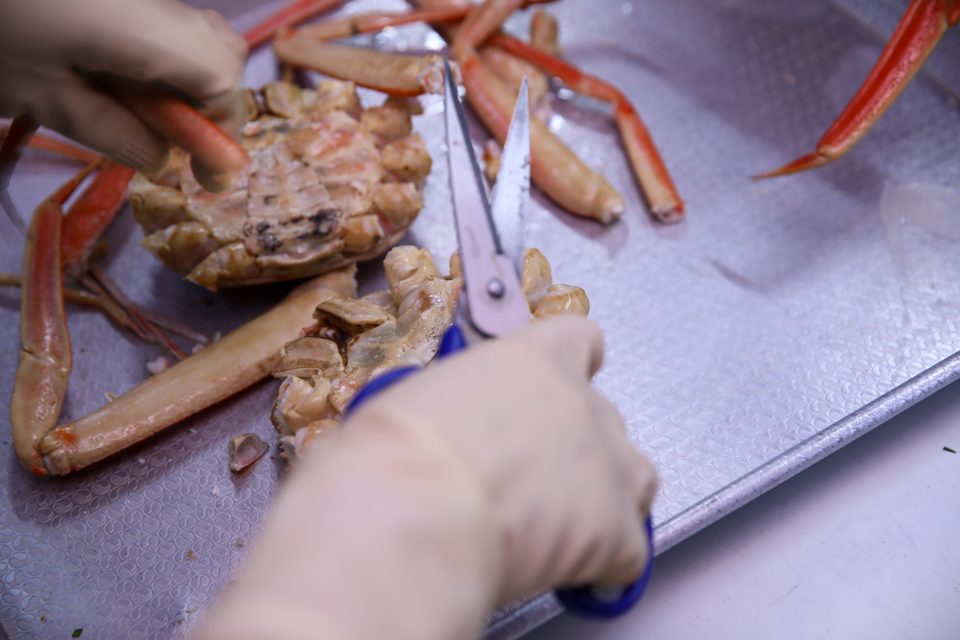
When you split the shell and the meat slips out whole in one piece, that is a good crab. A crab that still had strength left has its grain intact, so the meat comes away clean. When the meat clings to the shell and crumbles instead, it means the crab had already lost its strength.
Cutting through the leg joints feels different too. With a crab whose shell has hardened properly, there is firm resistance under the blade. A soft crab just gives way without a fight. It is a feel that lives in the hands and is hard to put into words, but do the work long enough and you know it.
Open the body and the innards are right there. In a well-filled crab the innards sit pooled and generous; in a poor one you can see the bottom through them. Customers see this instantly too. That is why we open the body and serve it that way. There is nothing to hide.
What comes out alongside
You do not eat the crab by itself; a spread comes with it. Let me note down what goes on the table.
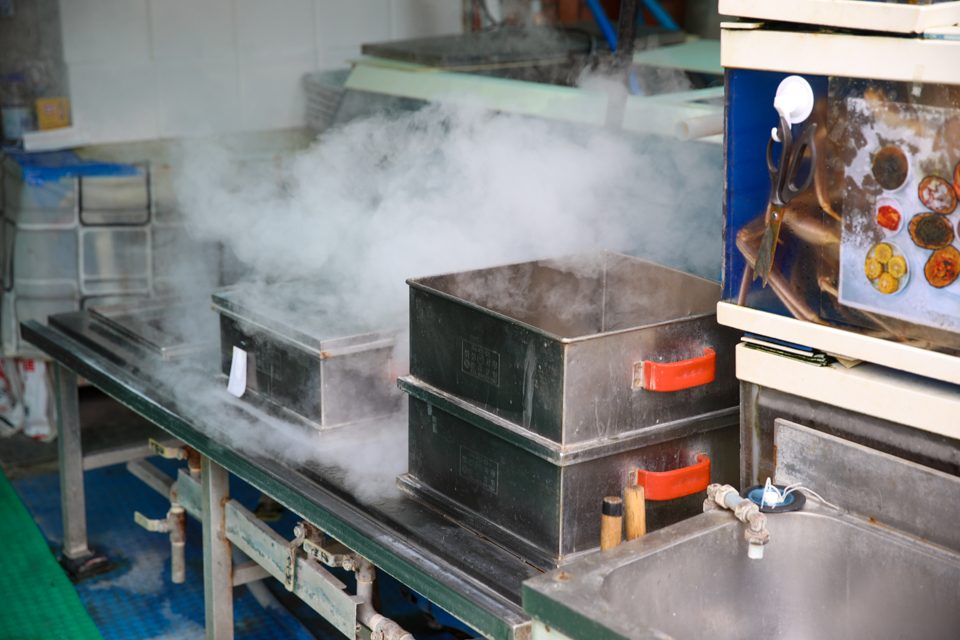
The table setting includes abalone, scallops, sea snails, octopus, shrimp, and gosiraegi seaweed. You eat these while the crab steams. Since we take the order first and only then pull the crab from the tank to steam it, it takes a little time.
The dishes that go out first are not seasoned strongly. The crab comes after, and if the front of the meal hits your palate too hard, you will not taste the crab’s sweetness. Think about the order of things: the front has to stay quiet so the back can sing.
The finish is fried rice in the crab top shell and doenjang stew. Plenty of people add red snow crab ramyeon alongside. Get that far and the meal is complete.
Frequently asked questions
What exactly is Magadan snow crab?
It means snow crab caught in the Magadan waters of Russia. It is not a separate variety; it is the name of the fishing ground. The snow crab as a species lives widely across the cold waters of the North Pacific, and the ones that come from the Magadan side are called by that name.
Is it a different species from the snow crab caught in the East Sea?
The species is the same. But the water temperature and the food differ, so the body turns out different. The cold-water side tends toward a thicker shell and denser meat, and the coastal side tends toward a softer bite with the sweetness up front. It is a difference in character, not in rank.
If it is Magadan, is it always full of meat?
No. How full a crab is depends on its molting cycle. A crab caught right after molting has a thin shell and an unfilled inside no matter where it came from. The fishing ground only tells you the average; the final judgment comes from picking the individual crab up yourself.
How do I recognize a crab that is full of meat?
Check three things. One that feels heavy for its size, one whose leg bases stay firm when pressed, and one with a slight yellowish cast on the belly side. When all three line up, you have a well-filled crab.
Is a thick shell not a hassle to eat?
It takes a little more effort. But we clean and cut everything before serving, so there is almost nothing left for the customer to fight with. And a thicker shell means the legs take less damage in transport, which works in favor of keeping the crab in good condition.
When is the best time to eat it?
The stretch where winter turns to spring is the best time. By then enough time has passed since molting for the shell to harden and the inside to fill out. Pick one up and the heft in your hand is clearly different.
Is it all right to ask where the crab is from?
You should ask. The seller knows where the stock came from. And if a shop mumbles around the answer, that in itself tells you something.
What about the price?
It is market price. The stock coming in changes every day, so we do not fix a number in advance. Call or message us on KakaoTalk before you come and we will tell you that day’s going rate exactly as it stands.
What is a soft crab, a so-called water crab?
That is the name for a crab that molted only recently. The shell is thin and the inside has not filled out. Buy the same weight and you actually get much less to eat, so it is best avoided. Press the base of a leg and it gives way soft under your finger.
Do the leftover shells get used too?
They do. We cook ramyeon with the leftover shells or put them into stew. Crab shell broth runs sweet before salty and finishes clean. That way one crab gets used down to the last of it.
How can I spot a crab that has been in the tank too long?
Look at the posture. A crab with its legs folded, stuck to the bottom and not moving, has lost its strength. And a crab with debris caught on the surface of its shell is also one that has been sitting in the tank a long while.
What does the cleaning work reveal?
When the shell is split and the meat slips out in one whole piece, the crab still had its strength; when the meat clings to the shell and crumbles, the strength was gone. Open the body and you can also see plainly how much of the innards has pooled there.
What comes with the table setting?
Abalone, scallops, sea snails, octopus, shrimp, and gosiraegi seaweed. You eat these while the crab steams. Since the crab comes after, the dishes up front are not seasoned strongly.
To sum it up
Magadan snow crab is a fishing ground, not a breed. Thanks to growing slowly in a cold sea, the shell tends to be well hardened and the meat densely grained, but that alone does not make any particular crab a good one. In the end, the answer is to pick up the crab in front of you and feel it.
Let me add just one thing. Knowing the fishing ground is a starting point, not a destination. Rather than memorizing names, learn the weight in your hand, the firmness at the base of the legs, the color of the belly. Those will serve you far longer, because they work at any shop, anywhere.
You will find us inside Gijang Market. The shop is Gijang Cheonghaewang Daege, the address is 12, Eupnae-ro 104beon-gil, Gijang-eup, Gijang-gun, Busan, and the phone number is 0507-1490-5702. We are open every day from nine in the morning to nine at night, and we will gladly tell you at any time what stock is in the tank that day.
How to set the weight for your party size is covered separately in the post on how many servings 1kg comes to.
Jung Young-jin
Gijang Cheonghaewang Daege · Owner · 25-year live seafood vendor