Gijang Snow Crab Is Not Caught in Gijang
Gijang is not where the crabs are caught but where they gather and get sorted. How the goods are divided in the dawn market and why buying at the hub works
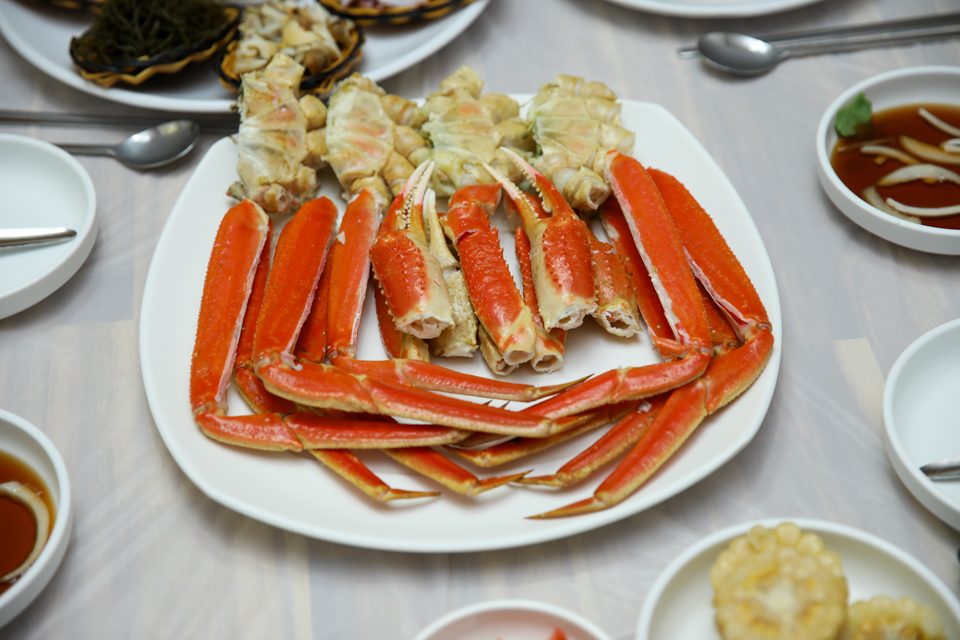
Gijang snow crab is not crab caught in the waters off Gijang. Gijang is not the place where the crabs are caught; it is the place where they gather and get sorted. Crabs landed from several different fishing grounds come together in this market, they are graded here, and the good ones stay here.
When you first hear the phrase Gijang snow crab, you may feel a little let down. You probably assumed it meant crab caught in the sea off Gijang, and now I am telling you that is not the case. I have seen that disappointed look on customers’ faces more times than I can count.
But if you listen just a little longer, I think you will change your mind. I want to explain why the place where crabs gather matters more than the place where they are caught, and how that difference shows up right there on your plate. I am writing only what I know, as someone who has stood in that same spot at dawn every single day for twenty-five years.
For the record, this article is not a pitch for any particular shop. It is an explanation of why the name Gijang sits in front of the words snow crab. Once you have read it, you will look at the tanks in the market with different eyes.
Contents
- Where crabs are caught and where they gather
- What happens at dawn
- How the grading works
- Why the good crabs stay here
- What changes at each stage of distribution
- Common misconceptions
- So how does the taste actually differ
- The market as a structure
- What separates one crab from another
- What to ask when you buy
- What comes through the market by season
- Frequently asked questions
Where crabs are caught and where they gather
Snow crabs live on the floor of cold seas. They need deep water and low temperatures to grow. The waters off Gijang do not offer those conditions. What this coast actually produces is seaweed and anchovies.
So why do snow crabs gather in Gijang? Because the market is here. A seafood market where goods keep moving does not spring up just anywhere. There has to be a route for the goods to come in, there have to be people ready to take them, and there has to be a way to hold them properly.
Gijang has all three. It sits where the East Sea meets the South Sea, so goods flow in easily. It has the huge consumer base of Busan right behind it. And because the market here is an old one, the tanks and the skilled hands are already in place.
That is why snow crabs from several different fishing grounds converge here. Crabs from the Russian side come in, and so do crabs from the East Sea coast. A place where things gather and then get divided up: that is Gijang.
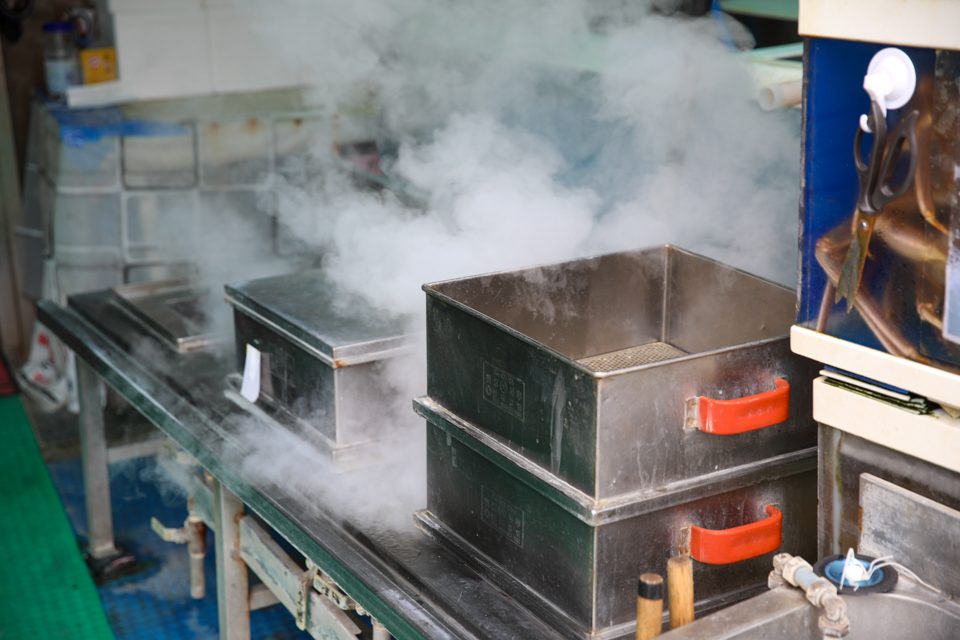
What happens at dawn
Dawn is when I go out to the market every day. Let me write down what actually happens at that hour.
When the goods arrive, we check their condition. We open the boxes and look inside, and what we are looking at is not size. It is how alive they are. There are always some in the mix that lost their strength during transport.
Next comes the hand. We pick each crab up, one by one. A scale cannot do this job, because a scale weighs the shell along with everything else. When you lift a crab by hand, you can feel how much meat is packed inside relative to the shell. After twenty-five years, that feel lives in your hands.
Then we choose. This is where the whole day is decided. On days when there is nothing good, I bring back less. If I force myself to fill the tank anyway, it is my customers who lose out that day. On days like that, I tell customers plainly that something else is the better choice today, and I recommend that instead.
This process repeats every single day. If you simply take delivery of what someone else has picked for you, this entire process disappears. And when it disappears, you know nothing about the goods you are selling that day.
How the grading works
There is no official grading system for snow crab the way there is for beef. So within the market, crabs get sorted by the trade’s own working standards.
The first standard is size. Crabs are divided by weight, and larger ones fetch a higher price per crab. But bigger is not automatically better. There are big crabs with hollow shells, and small crabs that are packed full.
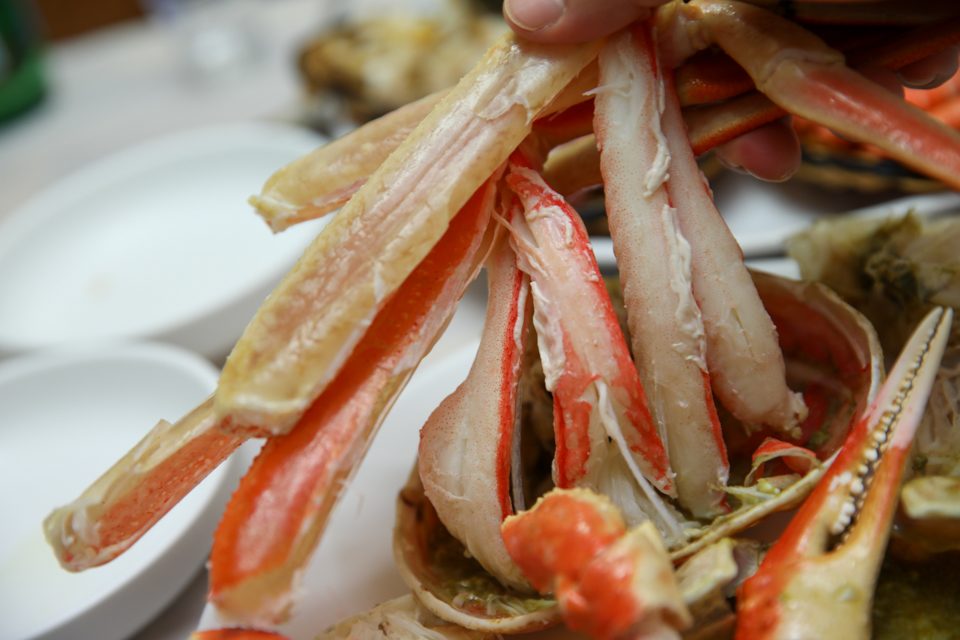
The second is how full the meat is. This is tied to the molting cycle. Right after molting, the shell is thin and the meat has not filled in yet. As time passes, the shell hardens and the meat fills out. We judge this by hand.
The third is vitality. A crab that stands up on its legs and raises its claws is priced differently from one lying flat on the bottom. Only a crab with strength left can hold up in the tank, and only a crab that holds up reaches the customer’s table in proper condition.
These three standards overlap, and that is how the goods get divided. And once divided, each grade heads off to a different destination.
Why the good crabs stay here
This is the heart of the matter. Why is it to your advantage to buy in Gijang?
In a place where goods converge, you get to choose. When ten boxes come in, you pull the good ones out of those ten. By contrast, the goods shipped out to distant places are either what was left after the picking, or, even if they were picked well, they still have to survive the journey.
Transport is hard on a crab. The longer it spends out of the water, the more strength it loses, and as it loses strength, it loses meat. The shorter the distance, the better the condition holds.
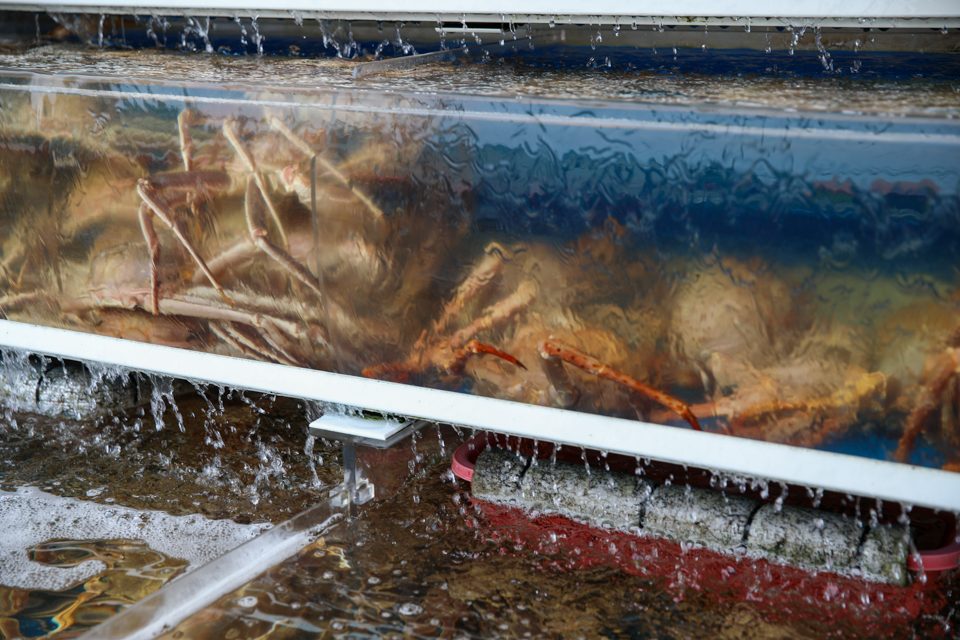
And the turnover here is fast. Because customers come steadily to this spot, the crabs do not sit in the tanks for long. A crab that sits too long burns its own body to survive, and its inside empties out. No amount of careful tank management can prevent that.
To sum it up: the name Gijang in front of snow crab is not a mark of origin, it is a mark of advantage in distribution. A wide range to choose from, a short journey, and a fast turnover.
What changes at each stage of distribution
Here is a summary of how crabs unloaded from the very same boat turn out differently depending on where they pass through.
| Stage | Range of choice | Time out of water | Effect on condition |
|---|---|---|---|
| Hub market | Wide | Short | Most favorable for keeping vitality |
| Middle distribution | Medium | Medium | Legs get damaged in transit |
| Distant retail | Narrow | Long | Strength fades and the meat shrinks |
What this table says is simple. Even for the very same crab, the condition you receive depends on where you buy it.
Common misconceptions
Talking with customers, certain misunderstandings come up again and again. Let me address just a few.
First, the belief that domestic crab is always better. The condition of the individual crab matters far more than where it came from. A domestic crab caught just after molting will be hollow inside, while a well-filled crab from the Russian side will be packed solid.
Second, the belief that bigger means better value. Large crabs also carry thicker, heavier shells. When you consider how much of the weight is shell, bigger is not automatically the better deal.
Third, the belief that a crab is only good if all its legs are attached. Legs sometimes break off during transport. What matters more than the count is how much meat is in the legs that remain.
Fourth, the belief that a redder crab is a better crab. They all turn red when steamed. The color of a live crab varies with the individual and its environment, and it is not directly tied to quality.
So how does the taste actually differ
Enough theory. When people ask how it actually differs in practice, this is my answer.
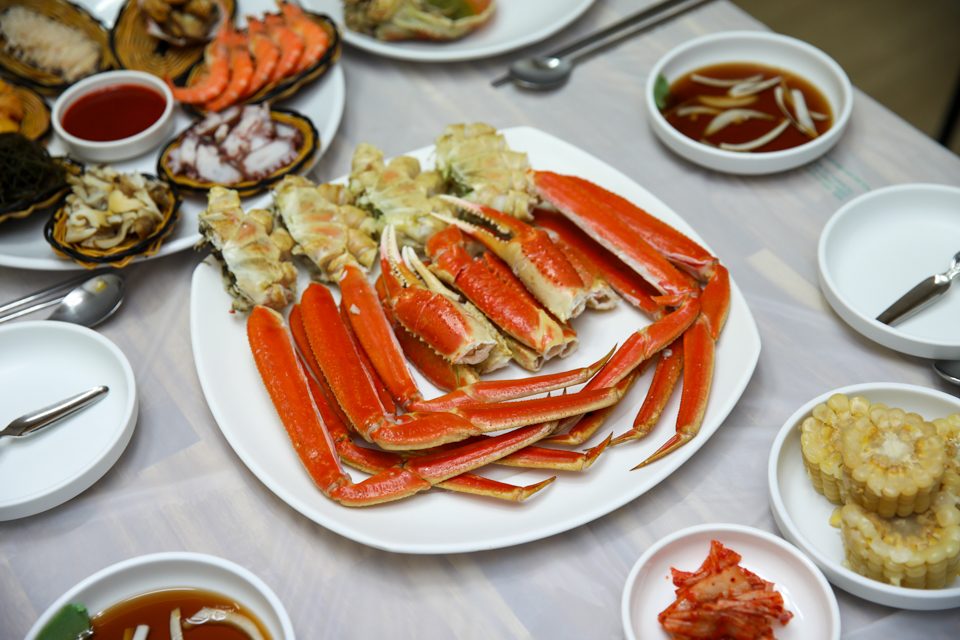
First, the texture of the leg meat. In a crab that still had its strength, the meat slides out of the shell in one whole piece. In a crab that lost its strength, the meat sticks to the shell and crumbles. You feel it the moment you start picking it out.
Second, the sweetness. The sweetness of crab meat comes from compounds that are maintained while the crab is alive. In a crab that has gone hungry for a long time, those compounds dwindle. That flat, watery taste people describe comes from exactly this.
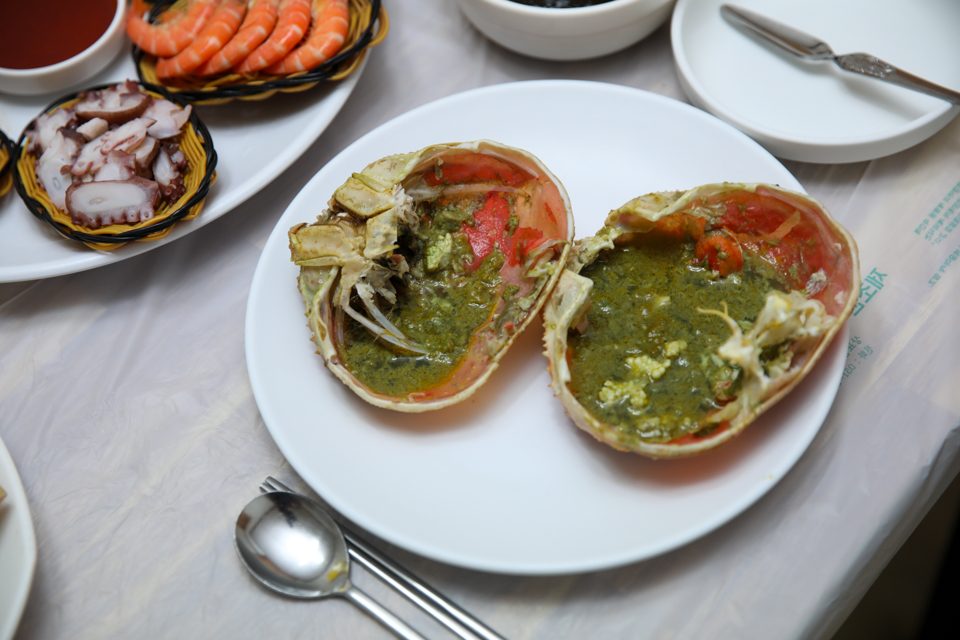
Third, the amount left in the top shell. This is the most visible difference. In a well-filled crab, the innards are brimming; in a poor one, you can see the bottom of the shell. Mix rice into it and the difference is unmistakable.
None of these three can be fixed by paying more. It all comes down to which crab you happen to meet that day.
What to ask when you buy
If you have read this far, you can probably guess what to ask. Three questions are all you need.
“When did these come in?” A crab that arrived today and a crab on its third day are not the same. The seller knows. And if the answer is evasive, that evasiveness is itself information.
“May I pick one up?” A shop selling live crab will usually say go ahead. Lift one by hand and you will feel that sense of weight I described earlier.
“What is good today?” This is the most powerful question of all. Someone who picks the goods every morning knows exactly what is good today and what is not quite there. Watch whether they simply point to the most expensive thing, or whether they tell you honestly that something else is the better choice today.
How we do things
Now let me hold our own shop up against the standards I have just described.
Every dawn I go out to the market myself and do the choosing. That is why some days our tanks are full and other days they are half empty. When there is nothing good, I bring back less. This is the way I have worked for twenty-five years, and it has not changed.
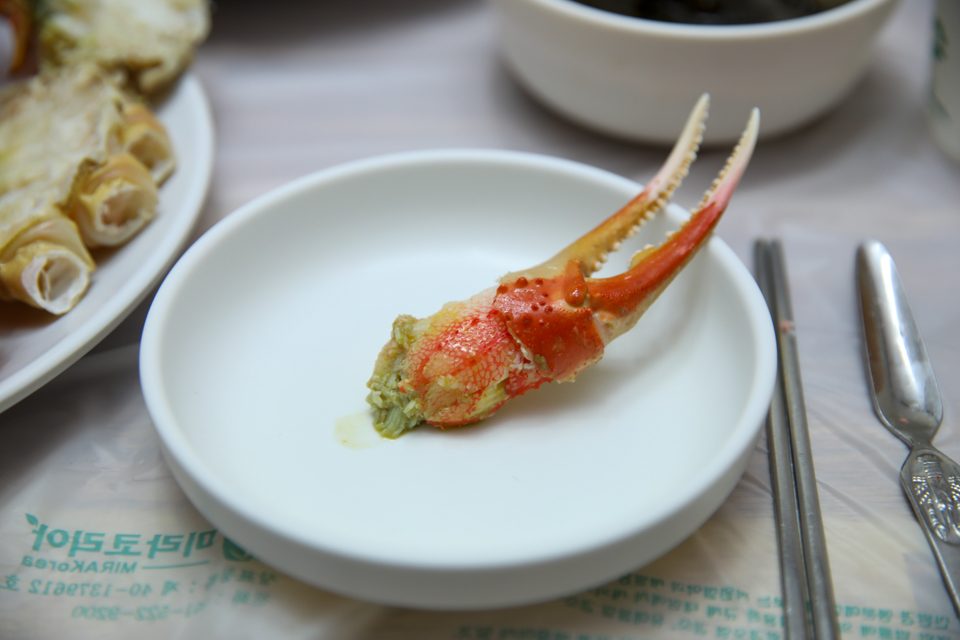
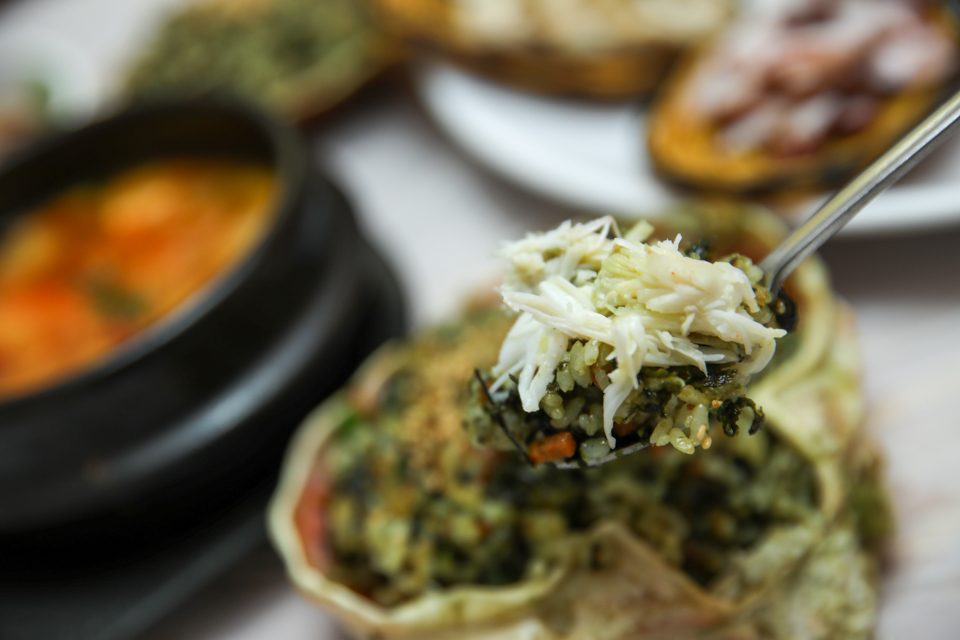
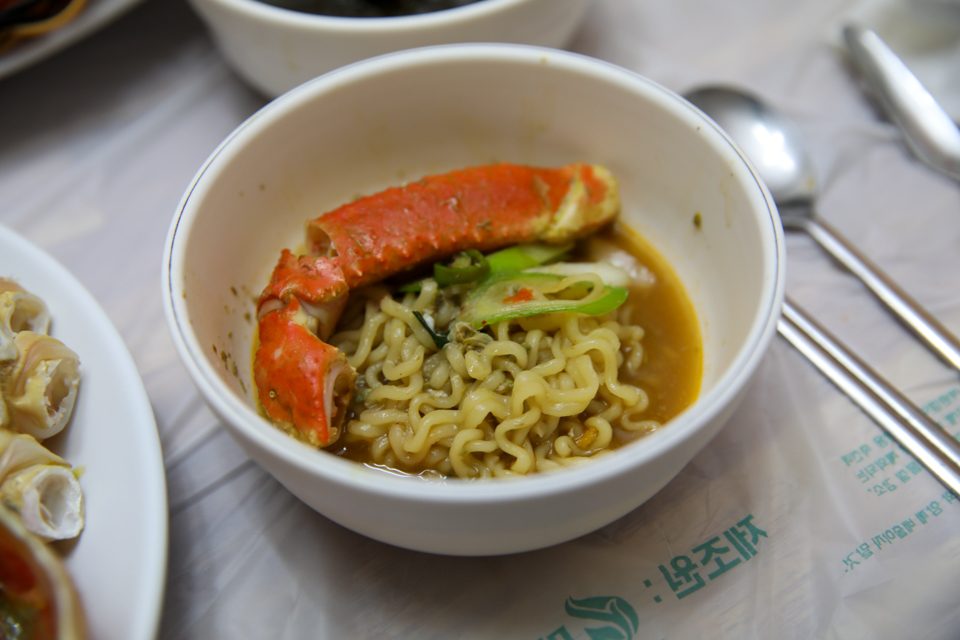
What we handle is snow crab, king crab, and red snow crab. To finish the meal we serve red snow crab ramyeon, soybean paste stew, and fried rice in the crab shell, and the table is set with abalone, scallops, sea snails, octopus, shrimp, and kkosiraegi seaweed alongside.
When you order, we take the crab out of the tank and start cleaning it. We put it on the scale right in front of you. The price is the market price. Because the goods change every day, we do not fix a number in advance; we tell you the day’s going rate as it stands.
The market as a structure
To understand Gijang snow crab, you need to know a little about the market as a structure. That is where the answer to why this place is special lies.
A market is not something one person builds. The people who bring in the goods, the people who take them and sell them, the people who manage the tanks, the people who do the cleaning: each has to settle into a role and stay there for years before the whole thing runs. That does not happen overnight.
And everyone watches everyone. We all know what goods the shop next door took in, and which boat came in today. That mutual watching is what holds the quality up. If one shop sells something questionable, the reputation of the entire alley goes down with it.
From the customer’s point of view, this works as a safety mechanism. Where many shops stand side by side, comparison is possible, and where comparison is possible, nobody can cut corners casually. This structure is the background against which the name Gijang snow crab earned its trust.
What separates one crab from another
Even with the same Gijang snow crab, the result differs from shop to shop. Let me write down where the difference is made.
First is the choosing stage. Does the owner go out at dawn to look and choose in person, or take a delivery and drop it straight into the tank? Half the outcome is already decided right here.
Second is tank management. Is the water circulating, is there room in the tank, is the temperature held steady? There are shops that take in good crabs and then squander them right here.
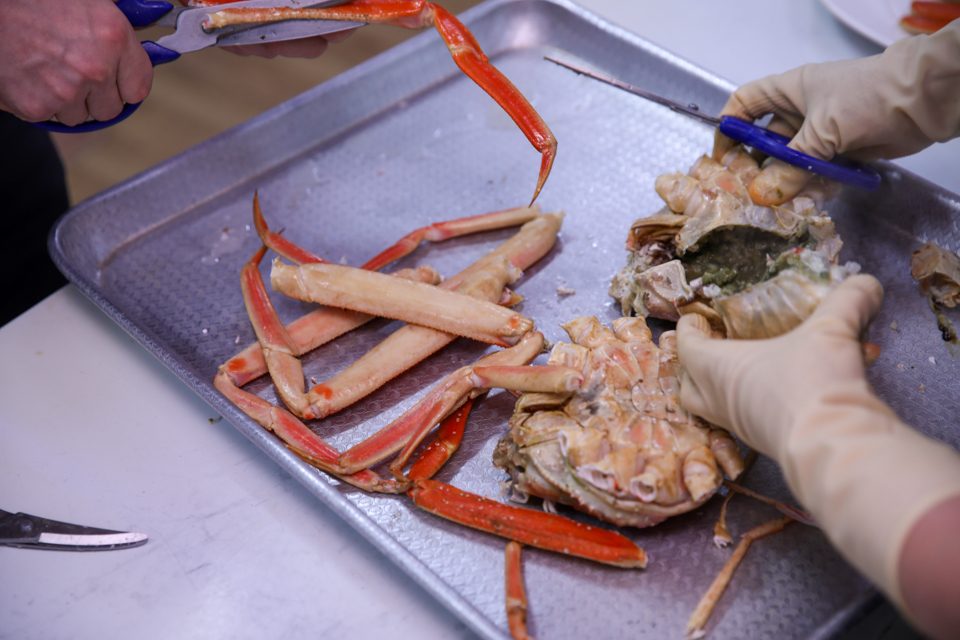
Third is the cleaning. Handle a crab too long and the meat turns soft. Practiced hands finish in a few motions. And whether the crab is steamed belly-up changes how much of the innards stay in the shell.
Fourth is turnover. Only when customers come steadily do the crabs avoid sitting long in the tank. This is not something one shop can achieve through effort alone; it is a matter of location.
Frequently asked questions
Is Gijang snow crab caught in the waters off Gijang?
No. Snow crabs live in deep, cold water, and the sea off Gijang does not offer those conditions. Gijang is a hub where crabs landed from several fishing grounds gather and get sorted.
Then why is it called Gijang snow crab?
Not because of origin, but because of the advantages in distribution. Since goods converge here, the range of choice is wide; the short journey keeps the crabs in condition; and the fast turnover means they never sit long in the tanks.
Is domestic crab better than Russian crab?
The condition of the individual crab matters far more than the origin. Even a domestic crab is hollow if it was caught right after molting, and even a crab from the Russian side is packed solid if it filled out well. Buy on origin alone and sooner or later you will get burned.
Is a bigger crab a better crab?
Not necessarily. Large crabs carry thick, heavy shells. There are big crabs with empty insides and small crabs that are packed full. The feel in your hand tells you more than the number on the scale.
Is a crab with missing legs a bad crab?
Legs sometimes come off during transport. What matters more than the count is how much meat is in the legs that remain. One thing to check, though: if water has gotten in where the leg broke off, the meat there turns soft.
What differences can I actually taste?
Three things. Whether the leg meat slides out whole or crumbles, whether the sweetness comes through or the taste is flat, and whether the shell is brimming with innards or you can see its bottom. Pick one apart and eat it, and you will know at once.
What should I ask before buying?
When it came in, whether you may pick one up, and what is good today. Those three questions are enough. The way a shop answers tells you what kind of shop it is.
What does choosing in person at dawn actually mean?
It means that when the goods arrive, you open the boxes, check the condition, and lift each crab by hand to choose. A seller who takes delivery of what someone else picked knows nothing about that day’s goods.
How is the price set?
It is the market price. The goods that come in change every day, so we do not fix a number. Ask by phone or KakaoTalk before you come, and we will tell you the day’s going rate exactly as it stands.
Why does the same Gijang snow crab differ from shop to shop?
The difference is made in four places: the choosing stage, tank management, the cleaning, and turnover. Whether the owner chooses in person at dawn or takes a delivery decides half of it already, and some shops take in good crabs only to squander them in the tank.
There are many shops in the market. Why is that a good thing?
Because it makes comparison possible. Everyone knows what goods everyone else took in, and if one shop sells something questionable, the reputation of the whole alley falls. That mutual watching becomes a safety mechanism for the customer.
Why is it bad for a crab to sit long in the tank?
From the moment it is caught, a crab cannot eat and survives by burning its own body. So the longer it sits in the tank, the more meat it loses. Even two crabs that came in on the same day are different inside: one sold within a day, the other sold four days later.
What comes through the market by season
Gijang snow crab does not mean the same goods circulate all year round. This is worth knowing before you come.
The stretch from winter into spring is the finest period. Enough time has passed since molting, so many crabs come in with hardened shells and well-filled meat. The range of choice is at its widest in this season too.
In summer, a closed fishing season applies along the coast. The whole makeup of what circulates in the market changes then. In this period, rather than insisting on any one thing, you are far better off asking what is good that day.
Autumn sits in between. Volume slowly starts to build again, so the variation in condition is wide. This is actually the season when a choosing eye matters most.
And things differ even within a single day. Midday offers the widest range of choice, and as the evening deepens, you are choosing from what is left. Move your visit just a little earlier and the result changes.
To sum it up
Gijang snow crab is not crab caught in Gijang; it is crab chosen in Gijang. Nobody can change where a crab is caught, but the choosing is done by people. That difference is what remains on the plate.
We are inside Gijang Market. The shop is Gijang Cheonghaewang Daege, the address is 12, Eumnae-ro 104beon-gil, Gijang-eup, Gijang-gun, Busan, and the phone number is 0507-1490-5702. We are open every day from nine in the morning until nine at night.
If you are curious about the fishing-ground names, this article explaining what Magadan is makes a good companion read.
Jung Young-jin
Gijang Cheonghaewang Daege · Owner · 25-year live seafood vendor