How to Pick a Good Snow Crab Restaurant in Gijang: Start With the Live Tank
In the alleys of Gijang Market, what to check when choosing a snow crab house is not the signboard but the live tank. Whether the water is flowing, whether
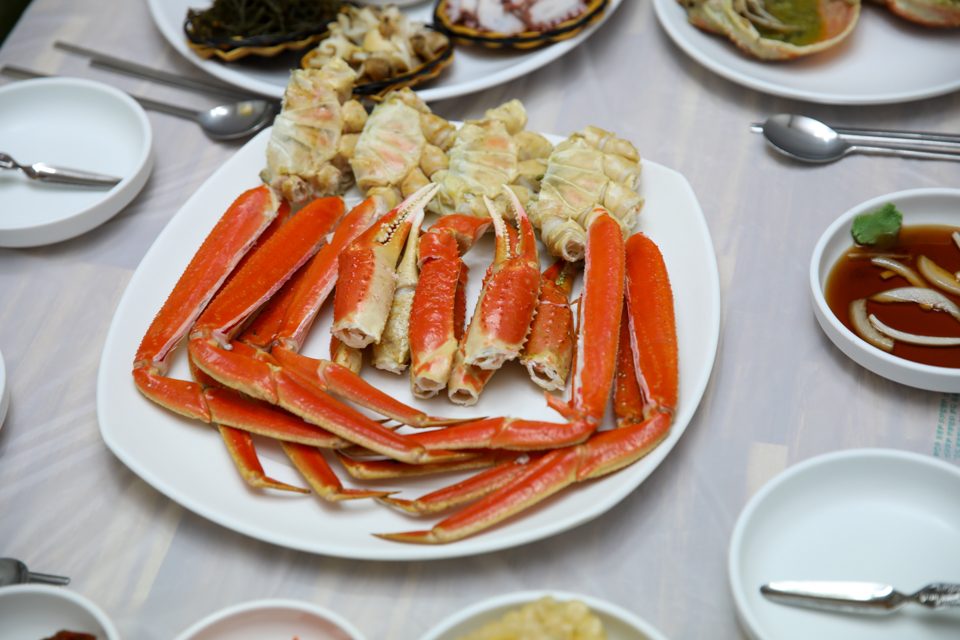
When you are choosing a snow crab restaurant in Gijang, start with the live tank. A menu board and a signboard can be dressed up as much as anyone likes, but the crabs sitting in the tank, and how often those crabs get replaced, cannot be faked. This article lays out the judging criteria I have built up over 25 years standing on the selling side of the counter.
Guests who searched for a good snow crab restaurant in Gijang often say something under their breath as they sit down at our tables. “Every place around here looked pretty much the same to me.” And they are right. Walk into the alleys of Gijang Market and the signboards all look alike, and at a glance the tanks lined up out front look identical too. Our own shop sits in that same alley, so this is not me talking about somebody else.
But when you have stood on the selling side for 25 years, you start to see the differences hiding inside that sameness. Which shop’s crabs came in this morning and which shop’s crabs have been sitting in the tank for three days, we merchants can tell just walking past. And once you know a few things to look for, you will see those differences too.
In this article I am going to write all of it down, exactly as I see it. This is not a pitch to come to my shop. These are criteria I am writing down so that whichever restaurant you end up sitting in, you do not walk away shortchanged. If you read this and choose a different shop, I have no regrets. What actually hurts this whole neighborhood is a visitor going home carrying the memory that Gijang snow crab was a disappointment.
What This Article Covers
- How to read the live tank
- How to read how fast the stock moves
- Watch the hands that do the cleaning
- Warning signs to filter out on the menu board
- When you go is half the battle
- A quick reference table for judging Gijang Market crab houses
- Three questions that get you real answers
- How we do things at our shop
- Frequently asked questions
How to Read the Live Tank
The tank in front of a shop is that shop’s resume. There are only three things you need to check.
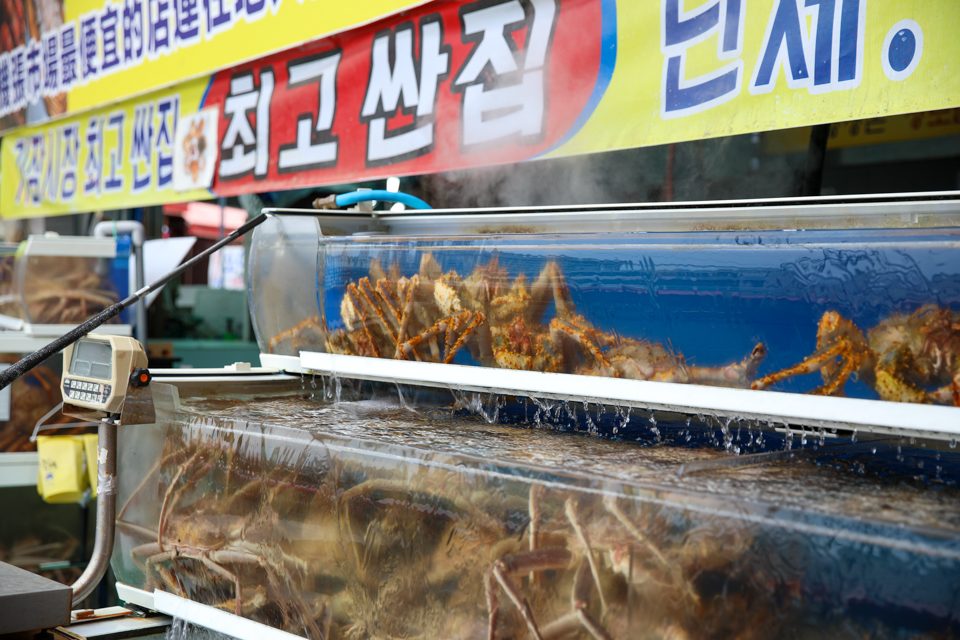
First, the water. The question is not whether it is clear or cloudy, but whether it is moving. In a well-kept tank the water circulates constantly, and you can see the surface rippling gently. If the water is standing still and there is residue clinging to the tank walls, that is a shop with a long maintenance cycle. When the water is bad, a crab can lose its strength in a single day.
Next, the density. If the crabs in one section of the tank are piled up in layers, they press down on each other and the legs get damaged. A shop that lays them out with room to spare is a shop that takes care of its stock. On the other hand, a tank that is nearly empty is also worth a second thought, because it can mean the stock simply is not coming in.
Last is the posture of the crabs themselves. A crab lying flat on the bottom with its legs folded and a crab standing up on its legs with its claws raised are easy to tell apart by eye. If six or seven out of ten crabs in the tank are holding themselves up like that, you can trust that shop’s stock.
How to Read How Fast the Stock Moves
Snow crab is not a packaged fresh product, it is a living animal. That is why how quickly the crabs go out matters just as much as how good they were when they came in.
A crab that stays in the tank too long loses meat. From the moment it is caught at sea it stops eating, and it survives by burning through its own body. Even two crabs that arrived on the same day from the same catch will be different inside if one went out within a day and the other went out four days later. No amount of care from the seller can prevent this.
That is why a shop with fast turnover has the advantage. The common wisdom that a busy restaurant is a good restaurant holds especially true for snow crab. Walk past a shop during the day and take a mental note, then come back in the evening. If the tank has visibly emptied out in between, that is a shop where the stock is really moving.
One more thing. At a shop where stock arrives every day, each section of the tank holds a mix of sizes, because crabs bought on different days end up layered together. If, on the other hand, an entire section is filled with crabs of exactly one size, it may be a shop that buys in bulk all at once and then sells that batch down until it is gone.
Watch the Hands That Do the Cleaning
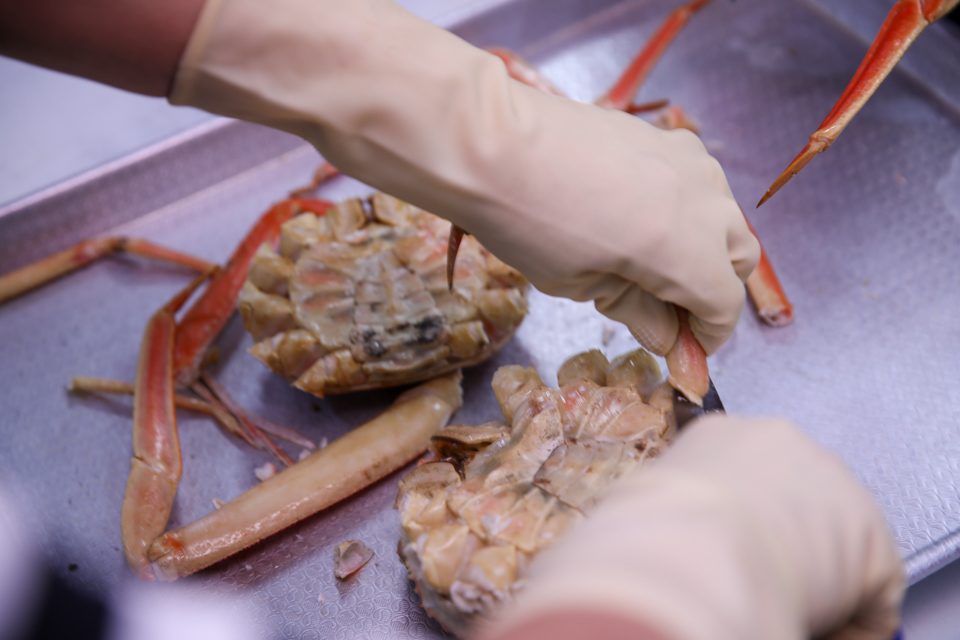
If it is a shop where you can watch the crab being cleaned and prepared after you order, take a moment and watch. You can learn quite a lot here.
First, check whether the crab goes into preparation while still alive. If a shop sells live crab, the right way is to take it out of the tank after the order is placed. If the shop reheats crab that was cleaned and prepared in advance, that is a different kind of business. I am not saying it is bad, I am saying the price and the character of the meal should be different.
Next is the speed of the work. The longer the crab is handled, the softer and mushier the meat becomes. Practiced hands finish in just a few motions. Even after 25 years, one thing that has never changed is that faster cleaning is always better.
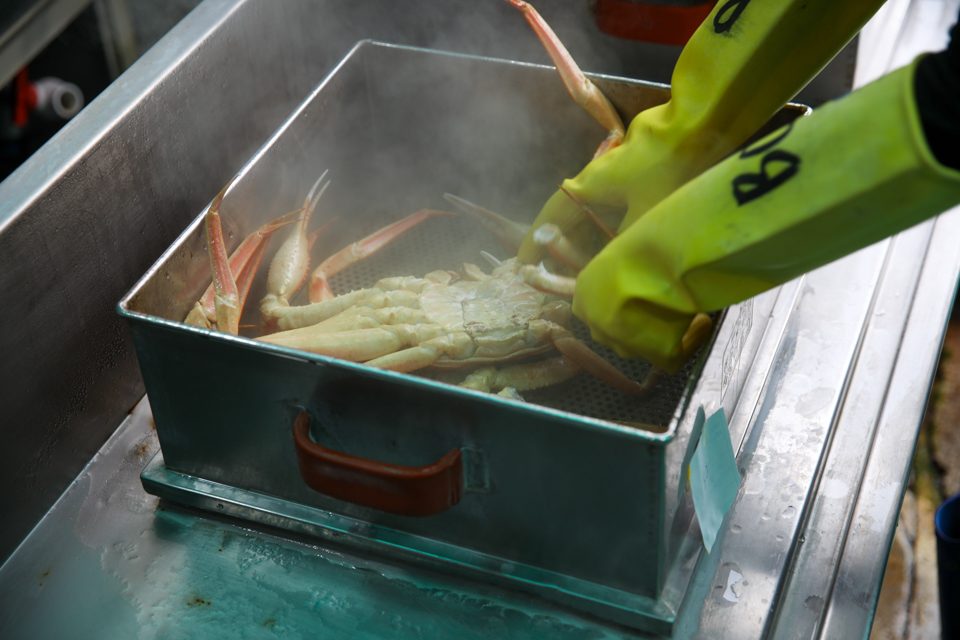
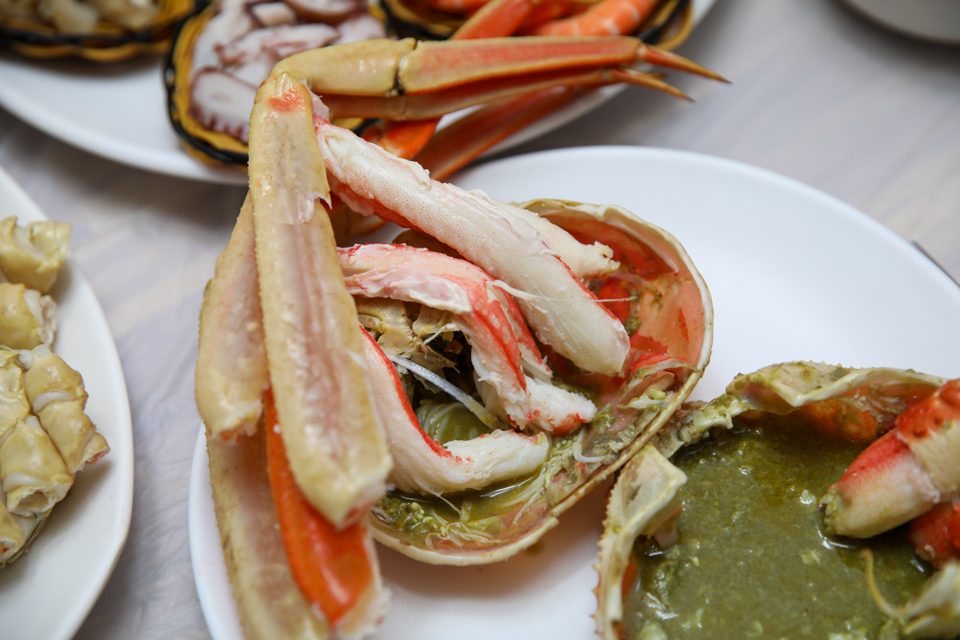
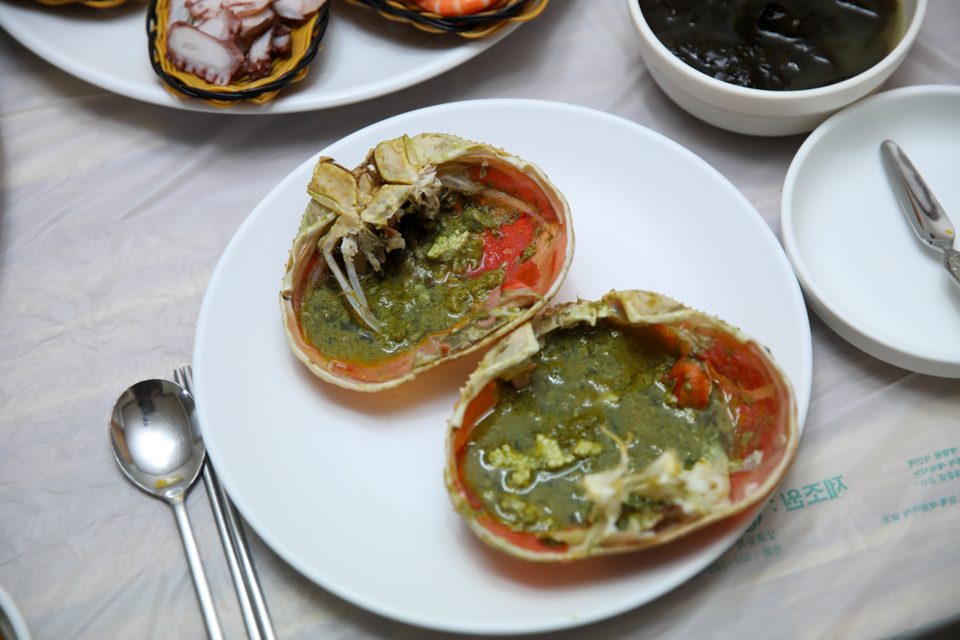
Finally, watch how the crab goes into the steamer. See whether they flip it so the belly faces up. If the back is placed downward, the tomalley and roe flow down into the legs and less of it stays in the shell. A shop that respects this step does not cut corners on the rest either.
Warning Signs to Filter Out on the Menu Board
There is plenty to read on a menu board too. Let me point out just a few things.
Think twice about a shop that carries far too many items. Snow crab, king crab, and red snow crab belong to the same family, so they can all be managed in one tank system. But when a long list of completely unrelated dishes is tacked on after those, it becomes hard for the shop to stay focused on any one thing.
Conversely, a shop with a simple lineup is a shop that handles those few items constantly. At our place, we carry snow crab, king crab, and red snow crab, plus a few finishing dishes, and that is all. The reason we do not expand is simple. When the number of items I have to select at dawn every morning grows, my eye for selecting them gets duller.
Also, look at how weight is listed. A shop that clearly states whether it sells by the weight of each crab or by combined total weight is an honest shop. When this is left vague, it tends to end in red faces at the register.
When You Go Is Half the Battle
Even at the same shop, what you receive depends on when you go. This holds true at any shop you choose.
The ideal window is after the dawn stock has arrived and settled into the tank, but before the day’s crowd shows up. The daytime hours fit this description. The selection is at its widest, and the shop has breathing room, so it is a good time to ask questions.
Weekend evenings are the opposite. Even if the stock was good, few crabs remain, so your choices shrink, and the preparation queue backs up. If you are planning to come during those hours, it is better to call ahead and let the shop know your party size.
Season matters too. The stretch from winter into spring is when the crabs fill out with the most meat. In summer, the closed fishing season falls in the middle of it and the available items themselves change, so at that time of year, rather than insisting on snow crab, you are better off asking what is good that day.
A Quick Reference Table for Judging Gijang Market Crab Houses
I have gathered everything above into one table so you can see it at a glance. All of these are things you can check in thirty seconds standing in front of the shop.
| What to check | Good sign | Sign worth a second look |
|---|---|---|
| Tank water | Circulating, surface rippling | Standing still, residue on the walls |
| Tank density | Laid out with room to spare | Piled in layers, or nearly empty |
| Crab posture | Legs standing, claws raised | Flat on the bottom, not moving |
| When cleaning starts | Taken from the tank after the order | Pre-cleaned stock reheated to serve |
| Steaming position | Flipped so the belly faces up | Dropped in back-down as is |
| Menu composition | Simple, centered on the crab family | Many dishes from unrelated categories |
| Weight labeling | States per-crab or combined total | No basis written anywhere |
If five or more of the seven rows land on the left side, you can sit down at that shop with confidence. If more than four land on the right, you are better off taking one more look at the shop next door.
Three Questions That Get You Real Answers
There is a method faster than using your eyes. Just ask. The way a shop answers tells you what kind of shop it is.
“Did these come in today?” A good shop will tell you right away when the crabs arrived and where they came from. If they mumble or change the subject, that is your answer.
“May I pick one up?” A shop selling live crab will almost always say go ahead. There is no reason to mind a customer checking the weight and firmness with their own hands. A shop that gets uncomfortable at the question has a reason to be.
“What is in the good stuff today?” This one is the most powerful of all. A person who selects the stock every morning knows what is strong and what is lacking on any given day. A shop that always points at the most expensive thing and a shop that says honestly, today this one is the better buy, are two different shops.
How Gijang Locals Choose
Where the neighborhood people buy is also useful information. But there is a misunderstanding here. A shop the locals go to is not automatically a good shop.
Locals usually weigh price and convenience together. Many of them go somewhere because it is close to home and it is where they have always gone. A visitor coming from far away, on the other hand, cares most about meeting the stock that is in the finest condition that particular day. The criteria are simply different.
So here is what I tell people. A shop full of locals is a shop that gets the basics right. Start there, and then layer on the tank and turnover checks I wrote about above. The shop where neighborhood reputation and what your own eyes see both line up is the right answer for that day.
How We Do Things at Our Shop
Now let me hold my own shop up to the same criteria I wrote above. That is only fair.
I go out myself at dawn every morning and select the stock. I do not take deliveries that someone else picked for me. That is why on some days the tank is full and on other days it is half empty. When nothing good is available, I bring back less.
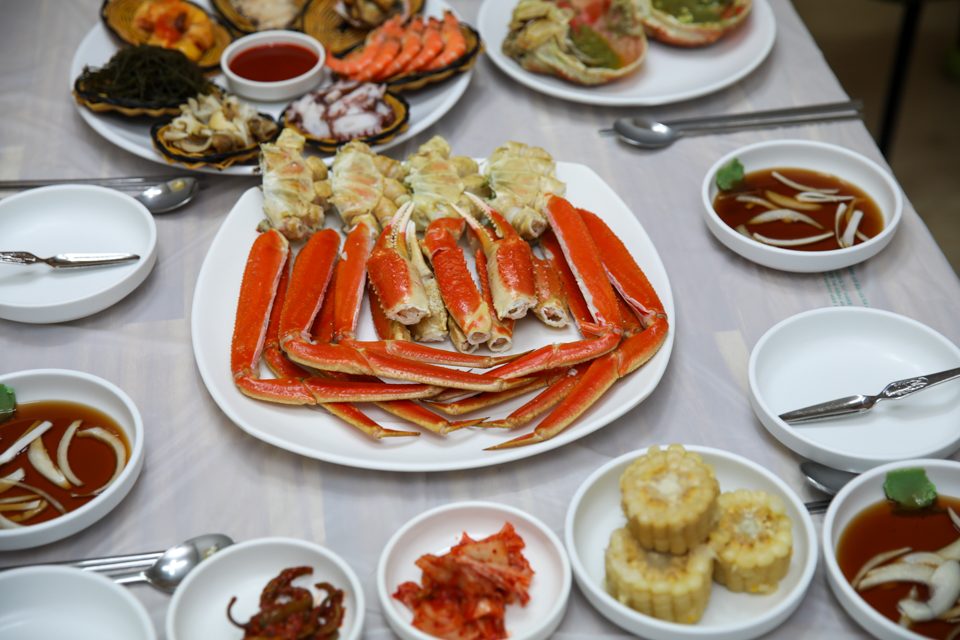
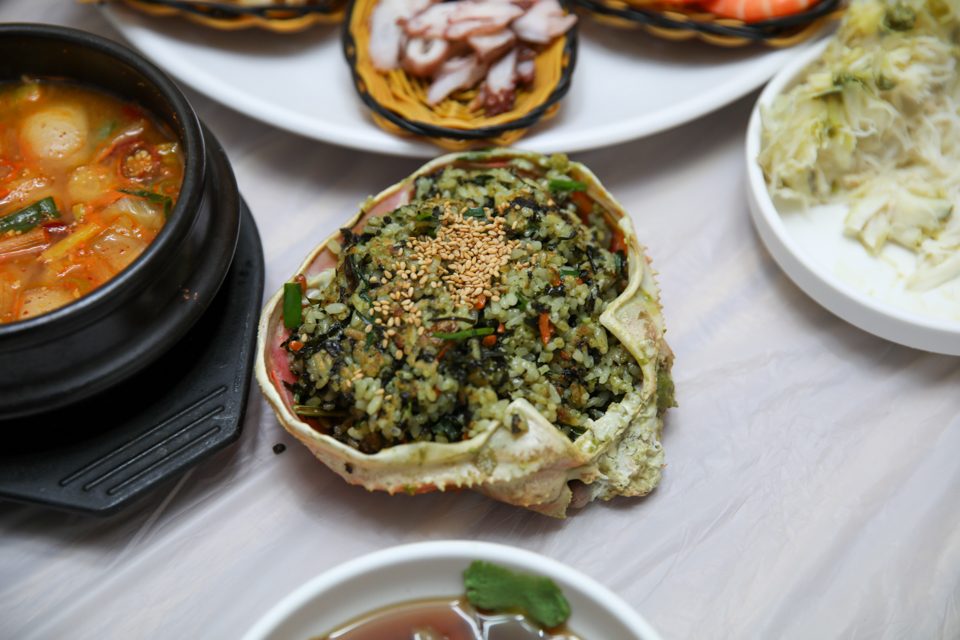
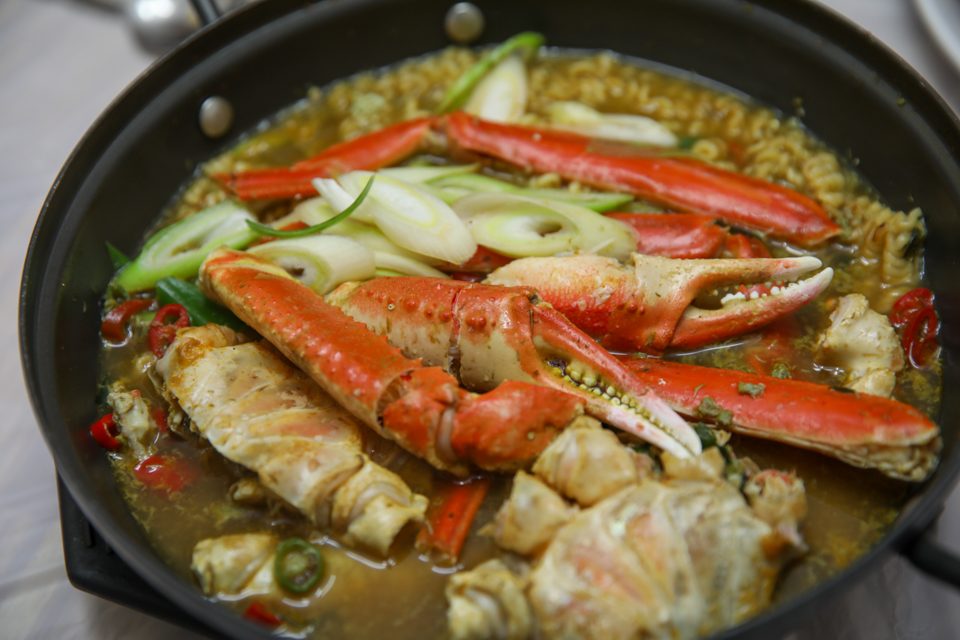
What we carry is snow crab, king crab, and red snow crab. To finish the meal we serve red snow crab ramyeon, doenjang stew, and crab shell fried rice, and the table setting comes with abalone, scallops, sea snails, octopus, shrimp, and gosiraegi seaweed alongside. That is everything.
Preparation starts only after we take your order and lift the crab from the tank. We put it on the scale right in front of you. The price is the market price. Because the stock changes every day, we do not fix a number in advance, and we tell you that day’s basis exactly as it is.
On days when stock with an especially good meat yield comes in, we announce it first on our KakaoTalk channel. Crabs like that come in small quantities and never stay in the tank for long.
What People Commonly Miss When Choosing
Finally, let me note a few things customers often overlook.
Many people choose by sheer size alone. Of course a big crab looks appealing, but if a crab is large and yet light, it is nothing but a big shell. You have to weigh size and heft together.
Some people judge by color. Shell color comes down to habitat and individual variation, so it does not connect directly to condition. The firmness of the belly side is far more accurate than color.
Arriving without telling us your party size is another missed opportunity. How many people, whether children are coming, what time you will arrive: one call with those details and we can set aside crabs matched to your group from that day’s stock. If you walk in on the day, you have to choose from whatever remains.
The Character of a Place Called Gijang Market
To talk about good snow crab restaurants in Gijang, you first have to understand the market itself. This is not a food alley bolted onto a tourist attraction. It is a place where wholesale seafood trade has always circulated, with retail stalls and restaurants layered on top of that base.
Why does this matter? Because it means the path the stock travels is short. Crabs that come up from the source ports at dawn are in the tanks within hours. If the structure required passing through several warehouses along the way, that much time would pass, and time always gets paid for in meat.
That said, not every shop in the market is the same. Even within the same alley, there are shops that go out and select their own stock, and shops that take whatever someone else picked for them. When I told you earlier to look at the tank and the turnover, that was ultimately a way of confirming this difference with your own eyes.
There is a reason I go out of my way to explain this structure to people who travel a long way looking for a good snow crab meal in Gijang. Whichever shop you sit down in, what that shop did at dawn this morning is what comes out on your plate. You cannot see that in the size of a signboard or the interior decoration.
Judgment That Shifts With the Seasons
The same criteria carry different weight depending on the season. This is hard for a visitor to know, so I am writing it down.
In the stretch from winter into spring, stock is plentiful. During this period, just about any shop gets the basics right. So among the judging criteria, the selecting eye becomes more important than turnover, because even crabs that came off the same boat on the same day vary widely from one individual to the next.
In the lean season, on the other hand, turnover is decisive. With less coming in, some shops start holding stock longer to keep selling. At such times, a shop whose tank is packed with crabs but has no customers deserves a second thought.
During the summer closed fishing season, there simply is no live local snow crab. If a shop is pushing snow crab at that time of year, it is frozen or imported stock. That is not a bad thing in itself, but it is a different product from live snow crab, and if so, the shop owes you an explanation. During that period, we guide our guests toward king crab and red snow crab instead.
What to Look For Depends on Who You Come With
Even among good snow crab restaurants in Gijang, the right shop splits depending on your party.
If you are bringing your parents, look at the seating first. Snow crab is a meal you sit with for a long time, picking the meat out shell by shell. If the seats are cramped and the room is loud, an hour becomes hard on them. Whether there is a private room, and whether the seating is comfortable, becomes as important as the condition of the stock.
If you have children with you, ask how thoroughly the crab is prepared before serving. At a shop that splits the legs open before bringing them out, a child can eat right away. If the crab comes out whole, an adult has to keep shelling for the child, and that adult barely gets to eat.
For a company dinner or a group gathering, the key question is whether the shop takes advance calls. A shop where you can give your headcount ahead of time and have crabs set aside from that day’s stock, and a shop where you must choose from whatever is left when you arrive, produce different results.
If it is just the two of you wanting a quiet meal, adjusting the hour works better than anything. Go during the daytime and any shop will feel unhurried.
Frequently Asked Questions
How do I choose a good snow crab restaurant in Gijang?
The first criterion is the live tank. Whether the water is circulating, whether the crabs are standing on their legs, and whether the stock turns over often: those three checks settle most of the question. A signboard and a menu can be dressed up, but the state of the tank cannot.
Inside Gijang Market or outside, which is better?
Stock turnover matters more than location. Inside the market, wholesale and retail mix together, so turnover tends to be fast. Outside, the seating is more spacious. Either way, look at the state of the tank and choose from there.
Do I need a reservation if I am coming all the way to Gijang?
If your party is four or more, or you are coming on a weekend evening, it is better to call ahead. It is partly about seating, but it also lets the shop set aside stock in good condition that day, matched to your headcount.
Is a shop that calls itself a snow crab house but also sells king crab still trustworthy?
Yes. Snow crab, king crab, and red snow crab belong to the same family and can be managed in one tank system. What deserves a second thought is a long list of dishes from completely unrelated categories.
Are the places locals go really better?
They are likely to be shops that get the basics right. But locals also weigh price and distance, so their criteria differ from a visitor’s. Add your own check of the tank condition on top of the reputation and you can be sure.
Is daytime or evening better for a visit?
Daytime is better. The dawn stock has settled in by then, so the selection is wide, and the shop has breathing room for your questions. On weekend evenings the choices shrink.
Is a shop with a tank full of crabs a good shop?
More is not automatically better. When crabs are piled in layers, they press on each other and the legs get damaged. A tank where the crabs are laid out with room to spare and the sizes are mixed belongs to a shop where stock arrives daily.
How do I check the price?
Most shops sell at the market price. Look at whether the scale is read in front of the customer, and whether the shop states clearly if the weight is per crab or a combined total. You can also simply call before you come and ask.
Can I come alone?
Of course. We have a steady stream of guests who come alone and eat a whole crab by themselves. If anything is left over, we pick out the meat and pack it up for you.
Can I eat snow crab if I visit in summer?
It depends on the timing. During the closed fishing season we do not carry it, and we guide guests toward king crab or red snow crab instead. The surest way is to ask what is available that day before you visit.
To Sum It Up
Choosing a good snow crab restaurant in Gijang is not difficult. Look at the tank, read the turnover, and ask the three questions. Any shop that passes those three checks is a shop you can trust.
We are inside Gijang Market. The shop name is Gijang Cheonghaewang Daege, the address is 12, Eumnae-ro 104beon-gil, Gijang-eup, Gijang-gun, Busan, and the phone number is 0507-1490-5702. We are open every day from nine in the morning to nine at night, and you can always find out what stock is in on any given day by phone or KakaoTalk.
If you are wondering what else to see while you are making the trip to Gijang, I have laid out a suggested order in a one-day route through Gijang.
Jung Young-jin
Gijang Cheonghaewang Daege · Owner · 25-year live seafood vendor