Songjeong Snow Crab: Why It Is Hard to Find in the Neighborhood
The area has settled around surfing and cafes, so it is not set up for live seafood tanks. From the seller's side, here is the way up to Gijang on the Dong
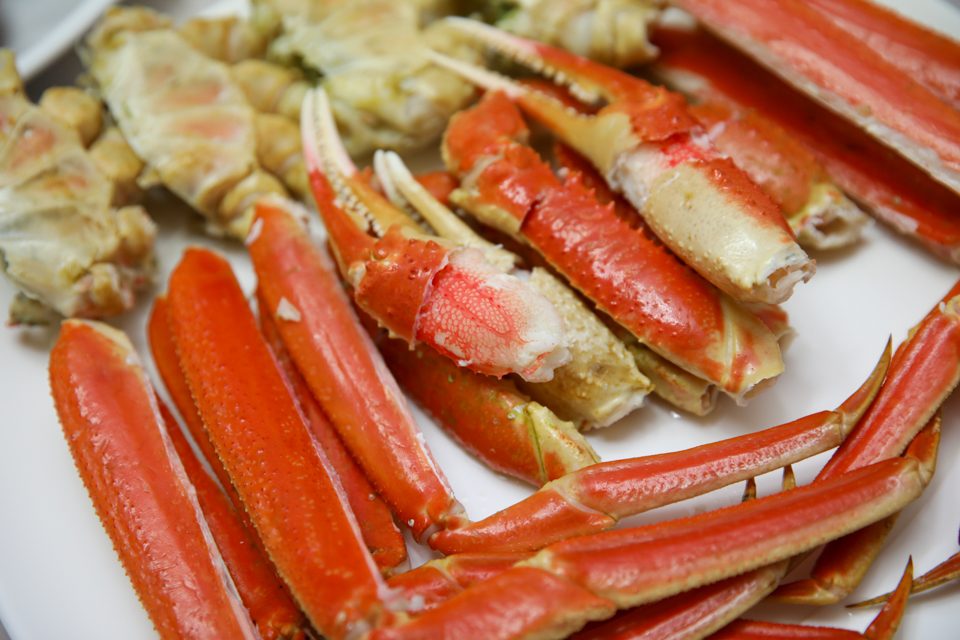
In Songjeong there are almost no places that handle snow crab. The neighborhood’s business district has settled firmly around surfing and cafes, so it is not the kind of place set up for live seafood tanks. If you are after snow crab, the quickest move is to come up toward Gijang on the Donghae Line.
Quite a few people search for Songjeong snow crab, spend the day at the beach, and then start looking for a table in the evening. It is only natural: you have come to the seaside, so you feel you ought to have at least one crab before you go home. But once you actually walk around Songjeong, the picture you had in mind does not really materialize.
There is a reason for that. Songjeong is a neighborhood whose character has changed over the past decade and more. As the surfing crowd grew and the cafes moved in, the local businesses reorganized around them. Selling live seafood out of a tank eats up a lot of floor space and takes constant hands-on care, and in a neighborhood like that, a business built that way has a hard time taking root.
So on the subject of Songjeong snow crab, this post covers two things. One is how to solve the crab question when you are in Songjeong. The other is, since you are going to make the trip anyway, what to check and how to choose once you get there. The second part will be longer, because that is the part that actually helps you.
Contents
- Why crab houses are scarce in Songjeong
- Getting up to Gijang
- Decide the weight first
- What to check with your hands when choosing
- Weight guide by party size
- The order the food comes out
- When a neighborhood changes, its trades change
- Using one crab down to the last of it
- For those coming straight from surfing
- Mistakes people often make
- A word about timing
- Frequently asked questions
Why crab houses are scarce in Songjeong
Selling live seafood has more demanding conditions than most people think. Once you know them, you understand why each neighborhood ends up with the trades it has.
First, the tanks take up serious floor space. If you stack crabs in layers, they press on each other and the legs get damaged, so they have to be spread out with room to spare, and that takes square footage. In a spot with an ocean view, the rent is high enough that giving that much floor to a tank feels like a waste.
Managing the water is work in itself. It has to circulate constantly and the temperature has to be held steady. Let it go for even one day and the crabs lose their strength. This is not something equipment alone can do; it needs a person on it, watching, every single day.
And the turnover has to carry it. A crab that sits in a tank too long burns its own body to survive and loses meat. In a location without a steady flow of customers, you cannot outrun the speed at which the stock deteriorates.
The place where all three of these conditions line up is a market district. Seafood already moves through there, so there is space for tanks, there are people on hand managing them, and the stock goes out every day. That is the difference between Songjeong and Gijang.
Getting up to Gijang
From Songjeong to Gijang Market is not far. There are two ways to do it.
The Donghae Line metro is the simplest. From Songjeong Station to Gijang Station is only a few stops, and from Gijang Station you can walk to the market. The trains do not run all that frequently, so check the schedule once before you set out and you will cut down the waiting.
By car it is even shorter. The road runs up along the coast, so the scenery is nothing to complain about either. Parking near the market is manageable as long as you avoid the daytime hours when it overlaps with people coming in to shop.
Either way, if you leave Songjeong around early evening, the timing works out. But the later it gets, the less stock remains, so it is better to aim for around six o’clock.
Decide the weight first
Here is where the real substance begins. When you buy snow crab, the first thing to settle is not the kind of crab, it is the weight.
A crab carries a lot of its weight in the shell. So there is a considerable gap between the live weight you buy and the amount of meat you actually eat. If you do not know this and set the weight by headcount alone, you end up either short or with too much left over.
To give you a rough feel for it: take out the shell and the innards, and the part that actually goes into your mouth is around a third of the live weight. That ratio moves up and down with the condition of the individual crab. A well-filled crab yields more, and one that molted recently yields far less.
So when you set the weight, ask about the condition of that day’s stock along with your headcount. The same weight comes out very differently depending on which crabs it is made up of. And that is something the seller knows.
What to check with your hands when choosing
When you stand in front of the tank, your hands are more accurate than your eyes. Try just three things.
One, pick it up. Among crabs of the same size, there will be one that feels noticeably heavy. That is the one that is full inside. Your hand knows this before any scale does.
Two, press the base of a leg. If it holds firm, the shell has hardened properly. If it gives way soft, the crab may have molted not long ago. With a crab like that, you buy the same weight but take home less to eat.
Three, look at the color of the belly. A crab with a yellowish cast to the underside has lived longer than one with a clean white belly. Living longer means plenty of time has passed since molting, and that means the inside has filled out.
These three checks, once learned, will serve you anywhere. At our place or at anyone else’s, it works just the same.
Weight guide by party size
I have laid this out so you can get your bearings before you even ask. But it shifts with the condition of the day’s stock, so treat it as a baseline only.
| Party size | Light meal | Full meal | Notes |
|---|---|---|---|
| Two people | Around 1kg | Around 1.5kg | Assumes the closing dishes are included |
| Three to four | Around 2kg | Around 3kg | Easier to split across several crabs than one large one |
| Five or more | 3kg or more | Headcount x 0.7kg | Let us know ahead and we set stock aside to match |
The numbers in the table are live weight, shell included. The meat you actually eat is far less than that, so keep that in mind as you read it.
The order the food comes out
Once you order, the meal goes out in this order. Knowing it ahead of time makes the flow easier.
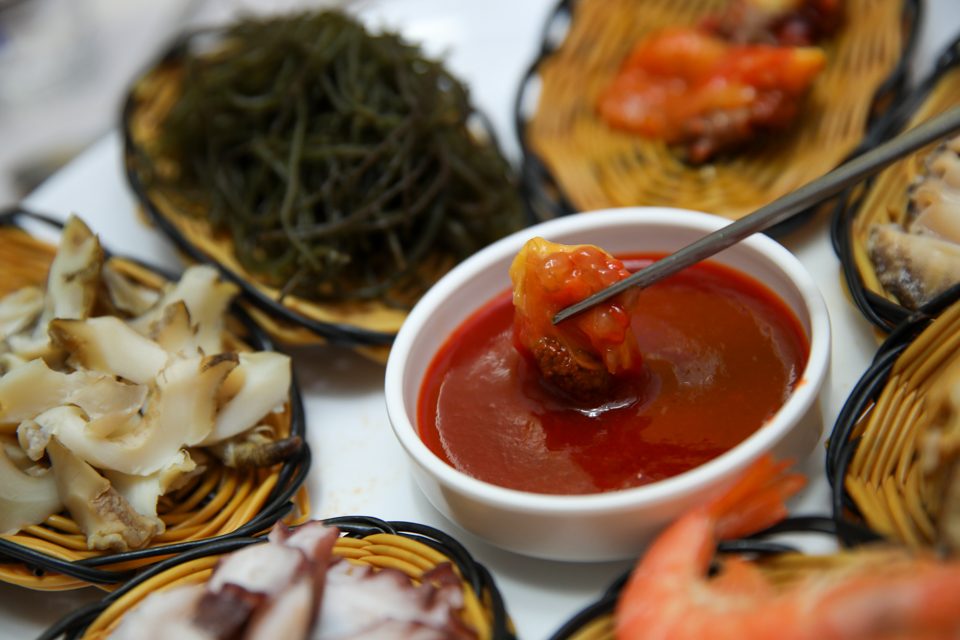
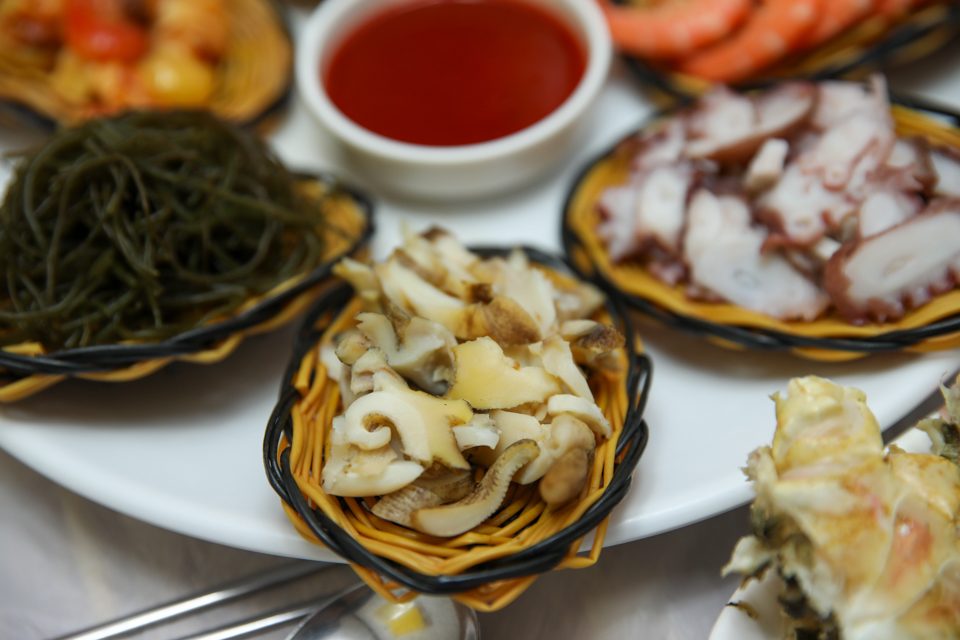
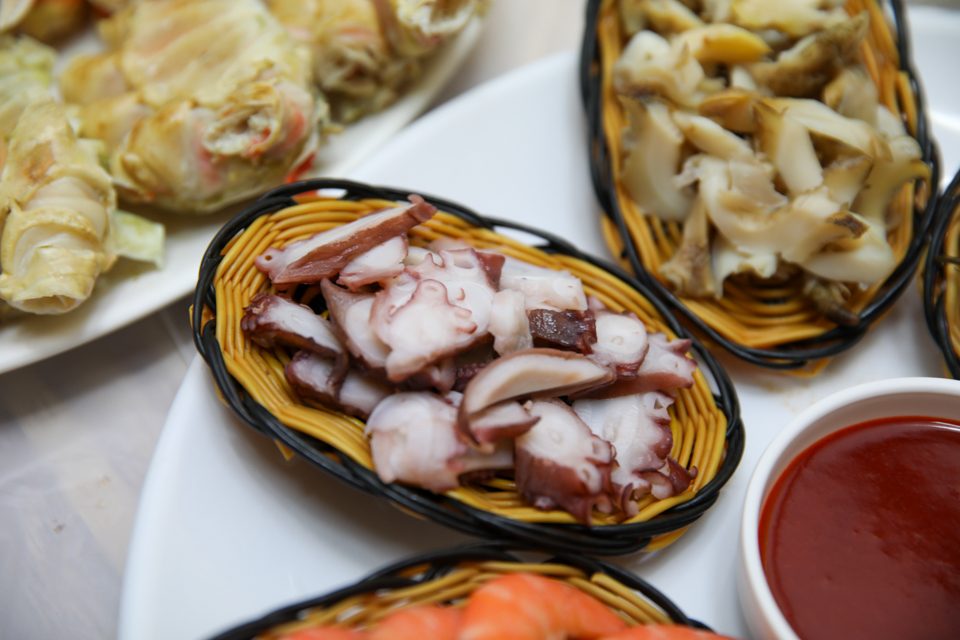
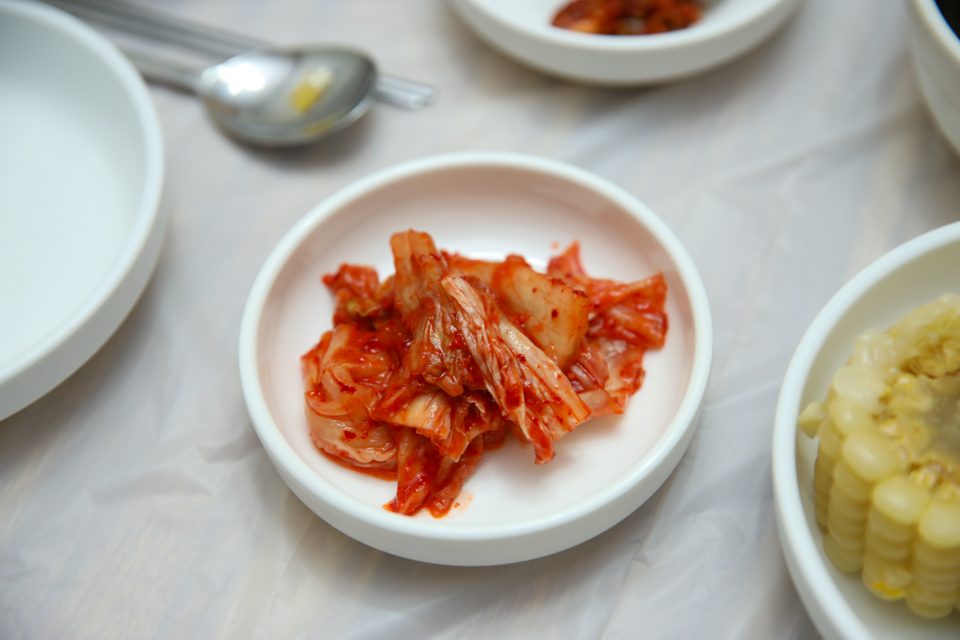
First the table setting is laid. Abalone, scallops, sea snails, octopus, shrimp, and gosiraegi seaweed all come out together. You eat these while the crab steams.
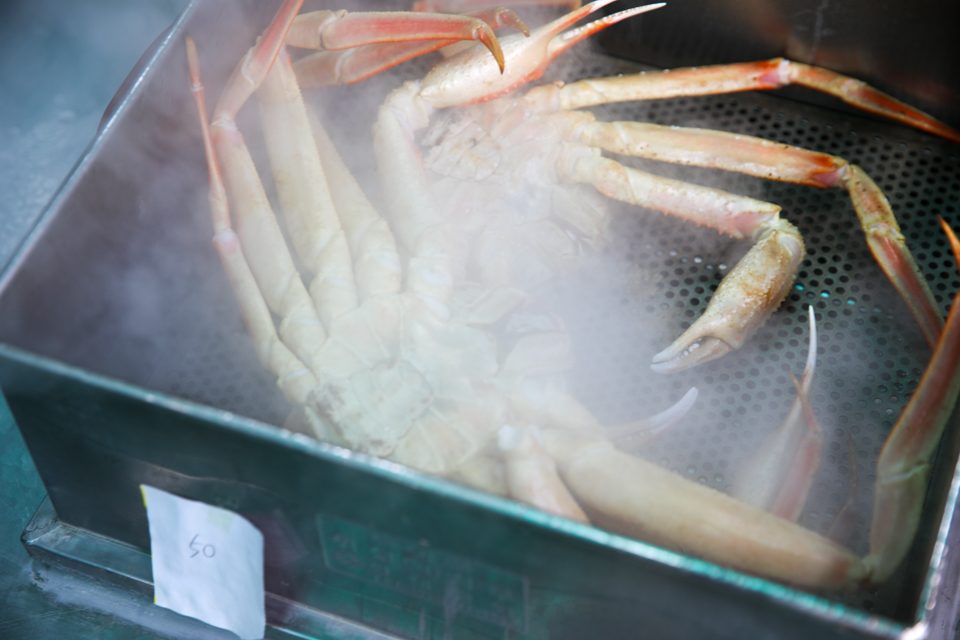
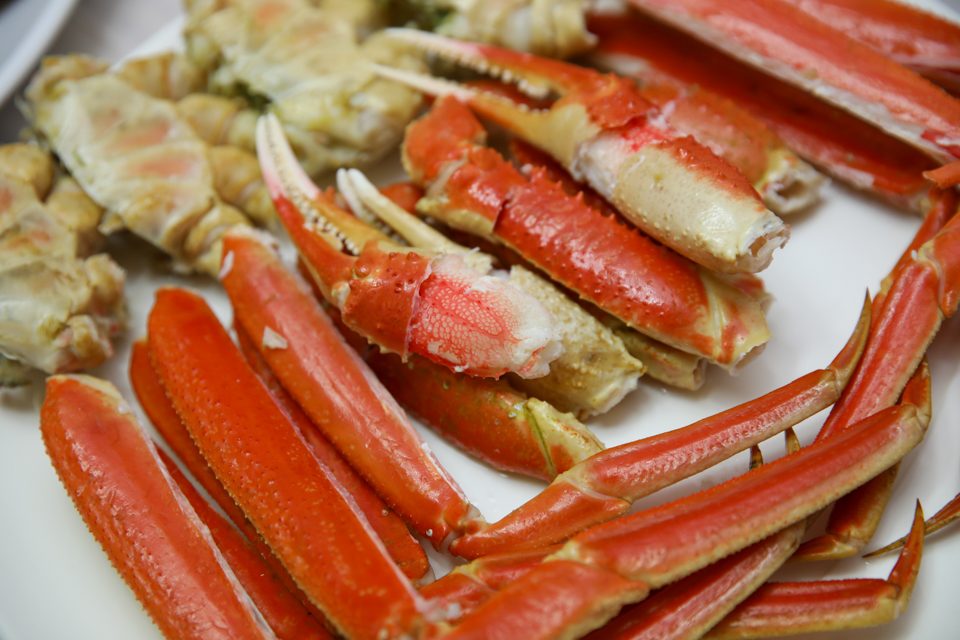
Then the crab arrives. We take the order first, then pull the crab from the tank and start steaming, so it takes a little time. It is best to start with the legs. Leg meat stiffens in the grain as it cools.
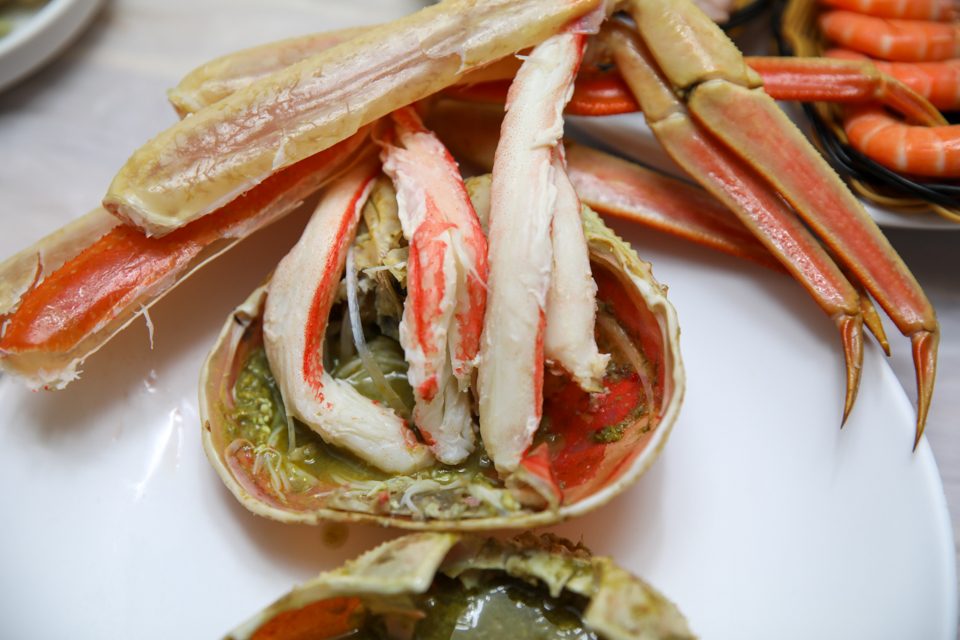
The body we serve split open. Just scrape it out with a spoon. It cools more slowly than the legs, so it is fine to get to it a little later.
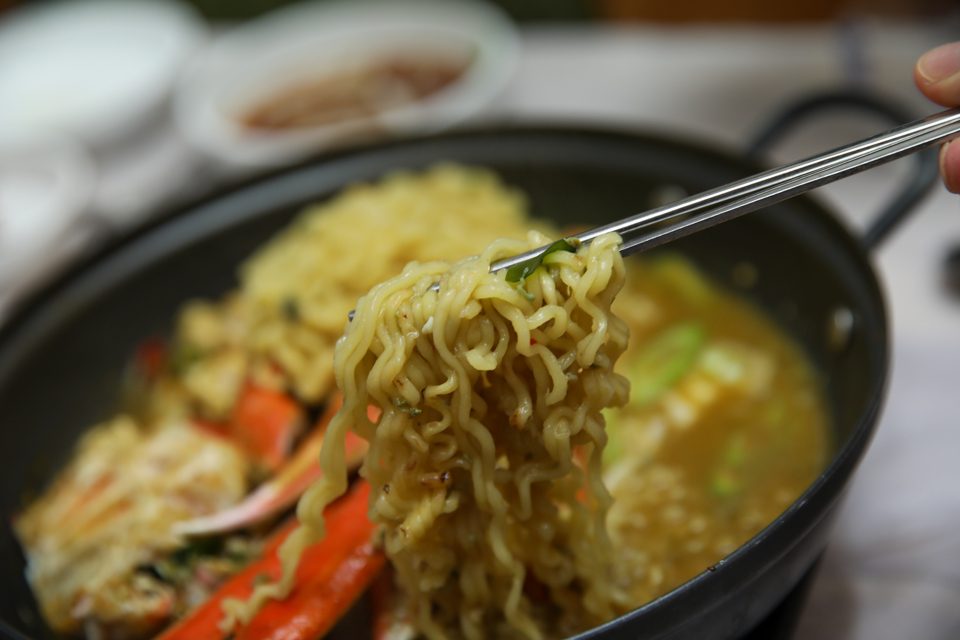
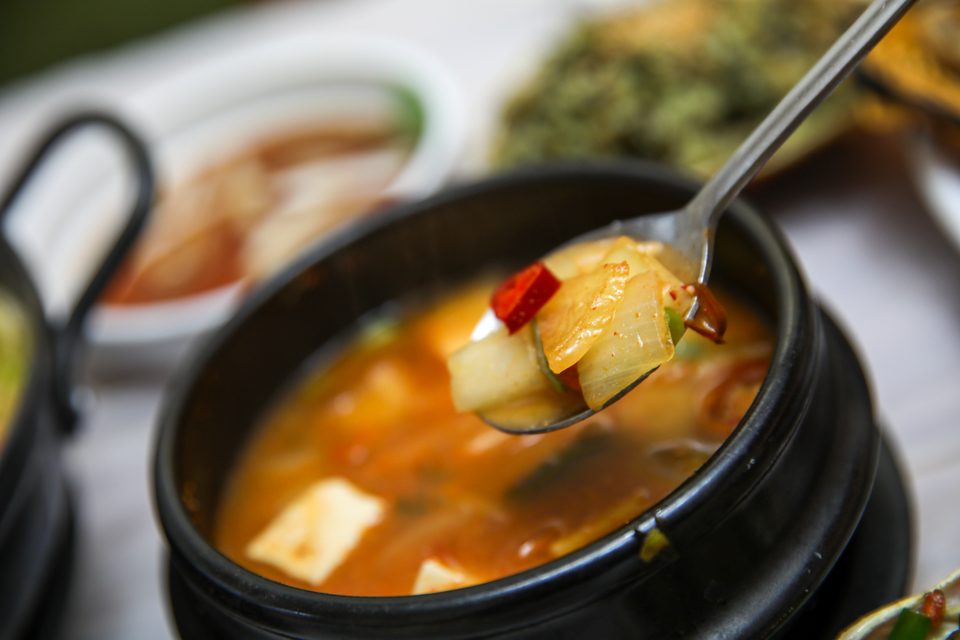
Last comes the top shell. Mix rice into the innards in there and the meal is complete. If you want broth, add ramyeon or doenjang stew alongside.
For those coming straight from surfing
Many of the people who come to us from Songjeong come straight from surfing. A few things worth saying.
After exercise, you are very hungry. But crab is food that takes time to eat. Even served cleaned and cut, there is still the time it takes to work the meat out. If your stomach is in a hurry, the better move is to start on the table setting while you wait.
Come dressed however you like. We are a restaurant inside a market; this is not a place that stands on ceremony. But eating crab does splash your hands, so it is best to leave the clothes you care about at home.
If you are coming as a group, it helps to contact us ahead. Partly for the seating, but also because we can set aside crabs from that day’s stock to match your headcount.
A word about timing
What stock you meet depends on when you come. Let me keep this brief.
The stretch where winter turns into spring is the best time. Enough time has passed since molting, so there are plenty of crabs with hardened shells and filled-out insides. The heft in your hand when you pick one up is clearly different.
In summer, the closed fishing season applies to the coastal waters. During that period, the very makeup of the stock moving through the market changes. At that time of year, rather than insisting on snow crab, you are better off asking what is good that day.
Songjeong gets crowded in summer. The market, by contrast, is relatively quiet in that season. If you want to avoid the crowds, that is worth keeping in mind.
About our place
Inside Gijang Market, we handle snow crab, king crab, and red snow crab. Every day I go out at dawn myself, look at that day’s condition, and only what I choose goes into our tanks. We do not take deliveries of what someone else picked.
When an order comes in, we pull the crab from the tank and start cleaning. The scale is read right in front of the customer. The price is market price. The stock changes every day, so we do not fix a number; we tell you that day’s going rate exactly as it stands.
To finish, red snow crab ramyeon, doenjang stew, and fried rice in the crab top shell go out. The table setting is as I described above. That is everything we handle, and we do not add to it.
When a neighborhood changes, its trades change
Talk about Songjeong snow crab long enough and it turns into talk about the neighborhood itself. Let me add a little more.
The Songjeong of years past was closer to a quiet fishing village. Then surfing came in and the mix of people changed. Younger visitors increased, stays got shorter, and the trades that fit that pattern filled the spaces. That is why the coffee and light meals multiplied.
Once the trades change, it is hard to turn back. The rents get repriced to the standards of the new trades. Handling live seafood in tanks needs a wide floor, and the price per floor stops being one that kind of business can carry.
So the fact that Songjeong snow crab is hard to find inside the neighborhood is nobody’s fault. The business district simply settled that way. Instead, a few stops away, there is a place where the conditions are all in order, and you can simply use it.
Using one crab down to the last of it
Since you went to the trouble of making the trip, the right thing is to eat it without leaving anything behind. Let me go part by part.
The legs have the grain of the flesh intact and give the best chew. Eat them hot. Once they cool, the grain stiffens, and the same meat comes across differently.
The body holds meat packed into chamber after chamber. We split it open for you, so just scrape it out with a spoon. This meat is softer than the legs, with the sweetness up front.
The claws have hard shells and take some effort. In return, the meat there is bundled the most firmly, so the chew is something else again. It is also the part the kids tend to love.
The innards in the top shell get mixed with rice. Add a little crumbled dried seaweed and a touch of sesame oil. And from the leftover shells we draw broth and serve it as ramyeon or stew. Do all of that and one crab has been used down to the last of it.
Mistakes people often make
Watch customers long enough and certain regrettable scenes repeat themselves. Tell you in advance and you can avoid them.
The most common one is arriving late. Come in close to eight in the evening and the odds are high that the day’s good crabs have already gone out. You have to choose from what remains, so the options narrow. Move your arrival up by just one hour and the picture changes.
The next is setting the weight too high. First-time visitors sometimes order generously and end up leaving food behind. Reheated crab never tastes the way it did the first time. If you come up short you can always add more, so it is fine to start on the low side.
The last is trying to eat only the crab. The table setting and the closing dishes together make the full meal. If you finish the crab and simply stand up, you are walking away from the innards left in the top shell and the broth in the shells. That is the biggest waste of all.
Frequently asked questions
Where do you eat Songjeong snow crab?
Places selling snow crab in Songjeong, meaning places with live tanks that actually handle it, barely exist. The neighborhood’s businesses have settled around surfing and cafes, and that is why. If you are after snow crab, the quickest way is to come up toward Gijang on the Donghae Line.
How long does it take from Songjeong to Gijang Market?
On the Donghae Line metro, it is a few stops from Songjeong Station to Gijang Station. From Gijang Station you can walk to the market. By car, you come up along the coast and it is even shorter.
How many kilograms should we order?
For two people, around 1kg; for three to four, around 2kg as a baseline. But that is live weight including the shell, and the meat you actually eat is around a third of it. It shifts with the condition of the day’s stock, so asking is the accurate way.
How do I recognize a crab that is full inside?
Check three things with your hands. One that feels heavy for its size, one whose leg bases stay firm when pressed, and one with a yellowish cast on the belly side. When all three line up, the crab is full inside.
Can we come straight from surfing?
You can. We are a restaurant inside a market, so nobody minds what you are wearing. But eating crab splashes your hands, so it is best not to wear clothes you are precious about.
Does the food come out right away after ordering?
No. We take the order, then pull the crab from the tank and start steaming. It takes a little time, so start on the table setting while you wait.
What about the price?
It is market price. The stock coming in changes every day, so we do not fix a number in advance. Call or message us on KakaoTalk before you come and we will tell you that day’s going rate.
We are coming as a group. Is there room?
We have a main hall and a private room. If you are coming as a group, it is best to contact us ahead. Partly for the seating, but also because we can set aside crabs from that day’s stock to match your headcount.
When is a good time to go?
The stretch where winter turns to spring is when the meat fills out best. Within the day, daytime gives you the widest selection. If you plan to come in the evening, aim for around six o’clock.
Around what time of day should we come?
For the evening, around six o’clock is good. Come close to eight and the odds are high the day’s good crabs have already gone out. Come during the day and the selection is at its widest.
It is our first time. How much should we order?
The first time, it is fine to order on the low side. If you come up short you can add more, and leftovers never taste the same reheated. Think of the table setting and the closing dishes as part of the total.
Do the leftover shells get used too?
They do. We serve them as ramyeon or stew broth. Broth drawn from crab shells runs sweet before salty and finishes clean.
Why does searching for Songjeong snow crab mostly bring up cafes?
Because that is genuinely what the neighborhood is. As the businesses settled around surfing and cafes, trades handling live seafood found it hard to take root. It is not that the information is thin; the reality is simply like that.
What is different once you get to Gijang?
Seafood moves through there, so there is space for tanks, there are people on hand managing them every day, and the stock goes out steadily. Only when those three conditions are met can live seafood be served in proper condition.
To sum it up
The reason Songjeong snow crab is hard to find inside the neighborhood is the character of its business district. That is not a shortcoming of Songjeong; it is simply how the local businesses settled. Move just a few stops and there is a place with all the conditions in order.
You will find us inside Gijang Market. The shop is Gijang Cheonghaewang Daege, the address is 12, Eupnae-ro 104beon-gil, Gijang-eup, Gijang-gun, Busan, and the phone number is 0507-1490-5702. We are open every day from nine in the morning to nine at night.
If you want more on how to choose a shop, I have written it up in detail in the guide to judging a place starting from its tanks.
Jung Young-jin
Gijang Cheonghaewang Daege · Owner · 25-year live seafood vendor